
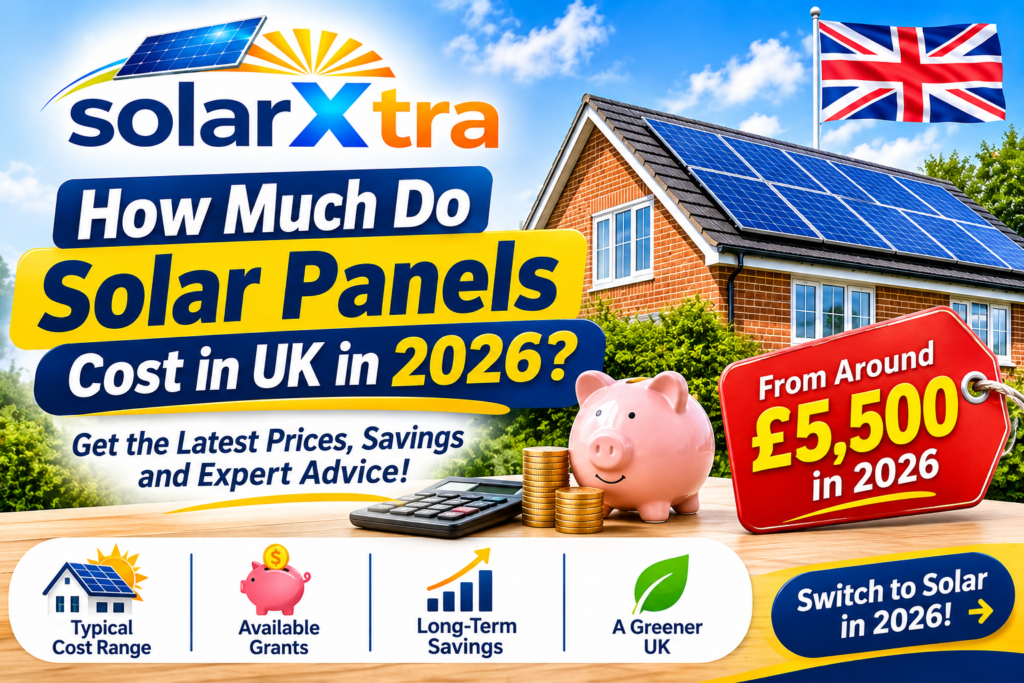
The solar panel installation cost UK homeowners pay depends on the system capacity, equipment specifications, roof design and labour requirements. The solar panels price UK property owners receive can also vary depending on whether they choose a standard residential system or a larger installation with battery storage.
When comparing the cost of solar panels in UK, it is important to consider the complete installation rather than the price of individual panels. A complete Solar PV system includes solar modules, mounting equipment, an inverter, electrical connections and the necessary installation work.
For homeowners researching solar panel installation prices, obtaining an itemised quotation makes it easier to compare different installers and understand what is included.
Understanding Solar Energy Technology and Solar PV Systems
Modern solar energy technology allows households to generate renewable electricity using photovoltaic cells. These cells convert daylight into direct current electricity, which is then converted into usable alternating current through a solar inverter.
The performance of a system depends on its design, panel specifications, installation quality and environmental conditions.
When evaluating different installations, homeowners should understand the relationship between solar panel system size, generating capacity and household energy requirements.
Choosing suitable renewable energy solutions can help property owners make better use of available roof space and manage their electricity consumption.
Residential and Commercial Solar Installation Options
Solar energy is suitable for different property types, provided the building has appropriate installation conditions.
A residential solar panel installation is generally designed around household electricity consumption, available roof space and future energy requirements.
By comparison, commercial solar installation projects often involve larger systems designed for offices, warehouses, factories, retail premises and other business properties.
Businesses with substantial daytime electricity consumption may be able to use a significant proportion of their generated electricity directly.
Both residential and commercial projects benefit from suitable system planning, professional installation and ongoing monitoring.
How Much Do Solar Panels Cost in the UK in 2026?
The average cost of a residential solar panel system in the UK depends primarily on its generating capacity, measured in kilowatts peak (kWp). A higher-capacity system usually requires more panels and additional installation materials, increasing the total project cost.
According to the Energy Saving Trust, a typical domestic solar installation of approximately 4.5kWp costs around £7,600. Other published 2026 estimates put the cost of a standard 4kW system at approximately £6,400 to £8,000, depending on the installation and pricing methodology.
Here is an indicative breakdown of solar panel installation costs:
| Solar system size | Approximate installation cost (without battery) | Typical application |
|---|---|---|
| 2kW | £3,500–£5,000 | Small properties |
| 3kW | £4,800–£6,500 | Smaller households |
| 4kW | £6,000–£8,000 | Average-sized homes |
| 5kW | £7,500–£9,500 | Medium to larger homes |
| 6kW | £9,000–£11,500 | Larger households |
| 8kW | £11,000–£14,000+ | Large homes with higher demand |
These are indicative budgeting ranges, not fixed Solar Xtra quotations. Actual prices depend on panel specifications, roof access, electrical work, scaffolding, equipment and installation complexity.
For a more accurate comparison, homeowners should request quotations based on the same system capacity and equipment specifications.
Solar Panel Cost by Property Size in the UK
The size of your property can help estimate the number of panels you might need. However, the number of bedrooms alone does not determine the correct system size. Your electricity consumption, available roof space, roof orientation and future energy requirements are equally important.
The following table provides an example of potential installation budgets for different property sizes.
| Property size | Suggested system capacity | Approximate number of 450W panels | Estimated solar installation cost |
|---|---|---|---|
| 1-bedroom home | 1.5–2kW | 4–5 | £3,500–£5,000 |
| 2-bedroom home | 3kW | 7 | £4,800–£6,500 |
| 3-bedroom home | 4–4.5kW | 9–10 | £6,000–£8,000 |
| 4-bedroom home | 5–6kW | 12–14 | £7,500–£11,500 |
| 5-bedroom home | 6–8kW | 14–18 | £9,000–£14,000+ |
These figures are starting points rather than recommended system sizes for every property.
For example, a three-bedroom household with an electric vehicle, an electric shower and regular daytime electricity consumption may need a different solar system from another three-bedroom household with lower energy requirements.
A professional assessment helps establish the appropriate solar panel system size before installation begins.
What Is the Solar Panel Cost for a 3-Bedroom House in the UK?
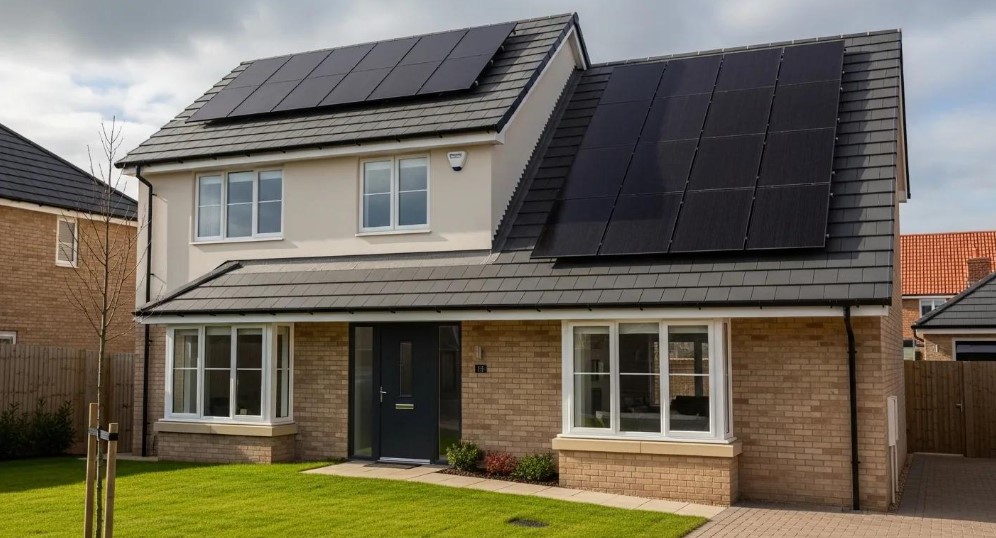
The solar panel cost for 3 bedroom house UK homeowners should budget for generally depends on the household’s electricity consumption and available roof space.
A typical three-bedroom property may require a 3kW to 4.5kW system, although homes with electric vehicles, heat pumps or higher electricity consumption may need additional generating capacity.
A suitable residential solar panel installation can help households generate their own electricity and reduce the amount they purchase from energy suppliers.
Before choosing a system, homeowners should consider:
- The property’s annual electricity consumption.
- The roof space available for roof-mounted solar panels.
- Expected solar electricity generation.
- Individual solar panel efficiency ratings.
- Whether future solar battery installation is required.
- The estimated electricity bill reduction.
How Much Does Solar Battery Storage Cost in the UK?
The solar battery storage cost UK homeowners pay depends on battery capacity, manufacturer, inverter compatibility and the complexity of the installation.
A suitable solar battery installation allows a household to store surplus electricity instead of exporting all unused generation to the grid.
This can increase household solar energy savings by allowing more generated electricity to be consumed during evenings and other periods when the panels are not producing sufficient electricity.
In 2026, an indicative budget for domestic battery storage is approximately £3,000–£7,000, depending on storage capacity, battery technology, manufacturer and installation requirements.
Estimated Solar Battery Storage Prices
| Battery capacity | Indicative installed cost |
|---|---|
| 3–5kWh | £2,000–£3,500 |
| 5–6kWh | £2,500–£4,000 |
| 8–10kWh | £3,500–£5,500 |
| 10–12kWh | £4,000–£6,500 |
| 13–15kWh | £5,000–£7,500+ |
Prices are indicative estimates and may differ depending on whether the battery is installed with a new solar system or added to an existing installation.
Is Solar Battery Storage Worth the Additional Cost?
A solar battery can be useful for households that consume a significant amount of electricity during the evening when solar panels are no longer generating power.
Its potential benefits include:
- Storing surplus solar electricity for later use.
- Reducing dependence on electricity imported from the grid.
- Increasing household consumption of self-generated electricity.
- Providing greater flexibility when choosing electricity tariffs.
- Helping manage energy consumption during periods of high demand.
However, a battery is not essential for every property. Homeowners should compare the additional purchase price against their expected electricity usage, export payments and potential savings before making a decision.
What Factors Affect Solar Panel Installation Costs?
There is no single price for installing solar panels across the UK. Two properties requiring similar system capacities can receive different quotations because their roofs, electrical infrastructure and installation conditions may vary.
Understanding these factors can help you evaluate quotations more effectively.
1. Solar Panel System Size
System capacity is one of the biggest influences on the overall installation price.
A 6kW system generally costs more than a 3kW system because it requires additional panels, mounting equipment and potentially a larger inverter.
However, larger installations can offer a lower cost per kilowatt because certain expenses, such as scaffolding and initial electrical work, are shared across more panels.
2. Solar Panel Type and Efficiency
Different solar panels have different performance characteristics, efficiency ratings and prices.
Common options include:
- Monocrystalline solar panels: Popular for residential installations because of their relatively high efficiency and space-saving potential.
- Polycrystalline solar panels: An older technology that is generally less efficient than modern monocrystalline alternatives.
- Thin-film solar panels: Lightweight panels used in certain applications where conventional rigid panels may not be suitable.
Panel efficiency matters particularly when roof space is limited. A professional installer can help compare panel output, warranty terms and overall value.
3. Roof Condition and Accessibility
Your roof plays an important role in determining installation expenses.
A straightforward pitched roof with sufficient space and easy access is generally simpler to work on than a roof with multiple slopes, dormers or difficult access.
Additional work may be necessary if:
- Roof tiles need repairing or replacing.
- The roof structure requires assessment.
- Scaffolding arrangements are complicated.
- The installation involves several roof sections.
- Existing obstructions affect panel placement.
It is advisable to address significant roof maintenance before installing a solar system.
4. Inverter and Electrical Equipment
A solar inverter converts the direct current (DC) electricity generated by solar panels into alternating current (AC) electricity used by household appliances.
The inverter is an important part of the complete solar installation.
Common inverter options include:
- String inverters.
- Hybrid inverters.
- Microinverters.
A hybrid inverter can connect solar panels and battery storage, making it a suitable option for certain solar and battery installations.
The selected equipment, electrical compatibility and any necessary consumer unit upgrades can affect the total quotation.
5. Installation Labour and Scaffolding
Professional installation involves more than attaching panels to a roof.
The work can include roof preparation, mounting equipment, electrical connections, inverter installation, system testing, monitoring configuration and relevant certification.
Scaffolding is commonly required for safe access to residential rooftops. The amount of scaffolding and labour needed depends on the building’s height, design and accessibility.
6. Location Within the UK
Installation prices can vary between regions because of differences in labour costs, local demand, transport and access requirements.
For example, a property in London may receive a different quotation from a similar property in the West Midlands or Yorkshire.
However, the location should not be the only factor when choosing an installer. Equipment quality, installation standards, warranties and aftercare are equally important.
How Much Can You Save With Solar Panels in the UK?
One of the main reasons homeowners consider solar panel installation is the opportunity to reduce electricity bills.
Solar panels generate electricity that can be used directly by household appliances. Every unit of solar electricity consumed at home can reduce the amount of electricity that needs to be purchased from an energy supplier.
The actual savings depend on several factors:
- Total electricity generated by the solar system.
- Household electricity consumption.
- The proportion of solar electricity used directly.
- Whether a battery is installed.
- Electricity import prices.
- The export tariff offered by your supplier.
- Roof orientation, shading and geographical location.
For example, a household that uses electricity during daylight hours may consume more solar generation directly than a household where everyone is away at work throughout the day.
A battery can help the second household retain some surplus electricity for evening use.
Example of Potential Annual Savings
The following is an illustrative example rather than a guaranteed financial return.
| Item | Example |
|---|---|
| Solar system capacity | 4kWp |
| Estimated annual generation | 3,400kWh |
| Electricity used directly at home | 2,000kWh |
| Electricity exported to the grid | 1,400kWh |
| Assumed electricity import rate | 25p/kWh |
| Assumed export rate | 10p/kWh |
| Value of electricity used at home | £500 |
| Value of exported electricity | £140 |
| Total annual electricity value | £640 |
The example assumes that all exported electricity qualifies for the stated export payment and that the household receives the assumed rates.
Actual electricity generation and financial returns will differ according to location, weather, system performance, household consumption and energy tariffs.
Can You Earn Money by Selling Excess Solar Electricity?
Yes. UK homeowners with eligible solar installations can receive payments for exporting surplus electricity through the Smart Export Guarantee (SEG).
The SEG requires participating licensed electricity suppliers to offer export tariffs to eligible generators, subject to the applicable rules and eligibility requirements.
This means that electricity not consumed or stored at home may be exported to the grid for payment.
Before choosing an export tariff, check:
- The export rate offered per kWh.
- Whether the tariff is fixed or variable.
- Contract conditions and eligibility.
- Metering requirements.
- Whether an MCS certificate or other approved evidence is required.
Not all export tariffs pay the same amount. Comparing available supplier offers can help homeowners understand the potential financial value of their surplus electricity.
Are Solar Panels VAT-Free in the UK in 2026?
Yes. Qualifying residential solar panel installations benefit from a 0% VAT rate under the UK government’s energy-saving materials VAT relief.
This relief also covers qualifying battery storage installations.
The current zero-rate period for qualifying installations in Great Britain runs until 31 March 2027. Northern Ireland has separate VAT arrangements, so property owners should check the rules applicable to their location.
This can make solar installation more affordable because eligible homeowners do not have to pay the standard VAT rate on qualifying equipment and installation services.
However, the treatment of individual projects depends on the applicable VAT rules and the type of work being carried out.
Are There Government Grants for Solar Panels in the UK?
There is no universal government grant that automatically pays for solar panels for every UK homeowner.
However, certain households may qualify for financial assistance through wider energy-efficiency programmes, depending on their income, property characteristics and eligibility.
The following options are worth investigating:
1. Warm Homes Plan
The government’s Warm Homes Plan is intended to expand financial assistance for home energy improvements, including support for eligible households. The availability and terms of individual measures should be checked before making financial decisions.
2. Local Authority Schemes
Some councils and regional programmes offer assistance for eligible households to make energy-saving improvements. Availability varies by location and funding.
3. Smart Export Guarantee
The SEG is not an installation grant. It provides an opportunity to earn payments for eligible electricity exported to the grid.
Homeowners should check the latest official scheme requirements rather than assuming they qualify for funding.
How Long Does It Take for Solar Panels to Pay for Themselves?
The solar panel payback period is the time required for the financial benefits of a system to equal its initial installation cost.
For example, if a homeowner spends £7,000 on a solar installation and receives an average annual financial benefit of £700, the simple payback calculation would be:
£7,000 ÷ £700 = 10 years.
This is a simplified calculation. It does not account for future electricity price changes, maintenance, inverter replacement, financing costs or changes in export tariffs.
The actual payback period depends on:
- Initial installation expenses.
- Annual electricity generation.
- Household self-consumption.
- Export payments.
- Electricity prices.
- Battery storage costs, if applicable.
- System maintenance and equipment replacement.
According to the Energy Saving Trust’s 2026 estimates, typical payback periods vary by location, with example estimates ranging from approximately 9 to 12 years across selected UK locations.
Solar panels can continue generating electricity beyond their initial payback period, although their output may gradually decline over time.
How Many Solar Panels Does a UK Home Need?
The correct number of solar panels depends on household electricity demand, panel wattage, available roof space and the amount of electricity the property aims to generate.
For example, a 4kW solar system using 450W panels would require approximately nine panels:
4,000W ÷ 450W = 8.89 panels.
In practice, this means installing nine panels, giving a nominal capacity of 4.05kWp.
Here are some examples:
| System capacity | 450W panel quantity |
|---|---|
| 2kW | 5 panels |
| 3kW | 7 panels |
| 4kW | 9 panels |
| 5kW | 12 panels |
| 6kW | 14 panels |
| 8kW | 18 panels |
These are approximate panel counts. The final design should account for the actual panel rating, roof dimensions, shading and electrical requirements.
Is 2026 a Good Time to Install Solar Panels in the UK?
For many homeowners, 2026 can be a suitable time to consider solar panel installation.
There are several reasons why solar energy remains an attractive home improvement:
Lower reliance on grid electricity: Generating electricity at home can reduce the amount purchased from an energy supplier.
Better control over energy consumption: Solar panels allow homeowners to use electricity generated on their own property.
Battery storage options: Modern solar installations can be designed to include battery storage for greater flexibility.
Potential export income: Eligible households can receive payments for surplus electricity through the SEG.
VAT savings: Qualifying domestic installations benefit from 0% VAT until 31 March 2027 in Great Britain.
Nevertheless, the decision should be based on a property’s electricity requirements, installation budget and realistic financial expectations rather than promotional savings claims.
Why Choose a Professional Solar Panel Installation Company?
Solar panels are a long-term property investment. Selecting an experienced and qualified installer is important for achieving a safe installation and reliable system performance.
Before choosing a solar installation company, consider the following:
- Check the installer’s relevant industry accreditations and certifications.
- Review the manufacturer’s product warranties.
- Ask for a detailed installation quotation.
- Confirm whether scaffolding and electrical work are included.
- Check the inverter and panel specifications.
- Ask about system monitoring and aftercare.
- Confirm that relevant network notifications and certification will be completed.
- Compare at least three quotations before making a decision.
An installation quotation should clearly explain the equipment, system capacity, labour, additional expenses and warranty conditions.
Get Professional Solar Panel Installation With Solar Xtra
If you are considering solar panels for your home or commercial property, Solar Xtra can help you explore suitable solar panel installation options.
Choosing the right system starts with understanding your property’s energy requirements, available roof space and expected electricity consumption. A properly planned installation can help you generate renewable electricity and make better use of the energy produced by your solar panels.
Solar Xtra provides installation-focused renewable energy solutions, including:
- Residential solar panel installation.
- Commercial solar panel installation.
- Solar battery storage installation.
- Solar monitoring solutions.
- Solar system design and installation planning.
Whether you are planning a new solar installation or considering battery storage for an existing system, the right assessment can help you understand the equipment and installation requirements.
Contact Solar Xtra to discuss your solar panel installation requirements and request a quotation for your property.
Website: https://solarxtra.co.uk/contact/
Frequently Asked Questions About Solar Panel Costs in the UK
1. How much do solar panels cost in the UK in 2026?
A typical 4.5kWp residential solar panel installation costs approximately £7,600 according to the Energy Saving Trust. Smaller systems may cost around £4,800–£6,500, while larger installations can exceed £10,000. The final price depends on system capacity, roof condition, equipment and installation requirements.
2. How much does a 4kW solar panel system cost in the UK?
A 4kW solar panel system generally costs approximately £6,000–£8,000, including standard installation. The price may increase if the property requires additional electrical work, complicated scaffolding or premium equipment.
3. How much does it cost to install solar panels on a 3-bedroom house?
A typical three-bedroom property may require a solar system of approximately 3–4.5kWp. An indicative installation budget is £4,800–£8,000 without battery storage. Actual requirements depend on electricity consumption and available roof space.
4. How much does a solar battery cost in the UK?
A domestic solar battery can cost approximately £3,000–£7,000 installed, depending on storage capacity, manufacturer and installation requirements. Smaller batteries generally cost less than larger systems.
5. Are solar panels worth installing in the UK in 2026?
Solar panels can be a worthwhile investment for households with suitable roofs and sufficient electricity consumption. They can reduce grid electricity purchases and provide export income through eligible tariffs. However, the financial benefits depend on the initial installation price, electricity usage and solar generation.
6. Can solar panels work during cloudy weather in the UK?
Yes. Solar panels generate electricity during cloudy weather because they can use daylight as well as direct sunlight. However, their electricity output is generally lower than during bright, sunny conditions.
7. Do solar panels work during winter in the UK?
Yes. Solar panels continue generating electricity during winter, although shorter daylight hours and lower sunlight levels generally reduce their output compared with summer.
8. Can I install solar panels without battery storage?
Yes. A solar panel system can operate without battery storage. Electricity generated during the day can be used immediately by household appliances, while surplus electricity may be exported to the grid through an eligible export arrangement.
9. Are solar panels VAT-free in the UK in 2026?
Qualifying residential solar panel installations benefit from 0% VAT in Great Britain until 31 March 2027. Eligible battery storage installations also qualify under the applicable VAT relief rules.
10. How long do solar panels last?
Many modern solar panels are designed to operate for 25 years or longer. Manufacturers commonly provide long-term performance warranties. However, the inverter and other system components may need servicing or replacement during the system’s lifetime.
11. Do solar panels increase property value in the UK?
Solar panels may make a property more attractive to buyers interested in renewable energy and lower electricity expenses. However, the effect on property value is not guaranteed and depends on the property, installation quality, ownership arrangements and local property market.
12. Can I sell unused electricity from my solar panels?
Yes. Eligible homeowners can export surplus electricity to the grid and receive payments through the Smart Export Guarantee. The payment rate depends on the electricity supplier and selected export tariff.
13. How many solar panels are required for a 4kW system?
A 4kW system requires approximately nine 450W solar panels. The exact quantity depends on the wattage of the selected panels.
14. Do I need planning permission to install solar panels in the UK?
Many domestic rooftop solar installations fall under permitted development rights. However, restrictions may apply to listed buildings, conservation areas and properties in other designated locations. Homeowners should check the relevant planning rules before installation.
15. How can I get an accurate solar panel installation quotation?
You should arrange a professional assessment of your roof, electricity consumption, electrical infrastructure and preferred system capacity. Request an itemised quotation covering panels, inverter, mounting equipment, scaffolding, labour, electrical work and any battery storage.