
How Much Does Solar Battery Storage Cost in UK 2026?
The Home Battery Storage Cost UK homeowners pay depends on the storage capacity, battery technology, inverter compatibility and installation requirements. When researching Solar Battery Cost UK 2026, it is important to compare complete installation packages rather than focusing only on individual battery prices.
Current Solar Energy Storage Prices vary between manufacturers and system configurations. Some homeowners choose smaller batteries for essential household electricity, while others invest in larger Residential Battery Storage systems to manage higher electricity consumption.
The overall Solar Panel Battery Storage Cost UK also depends on whether the battery is being installed alongside new solar panels or added to an existing system. A retrofit installation may require additional electrical equipment or a compatible inverter.
Before purchasing, compare different Home Solar Battery Prices and check what is included in the installation quotation.
Understanding Different Solar Battery Technologies
A Lithium-Ion Solar Battery is one of the most common technologies used in modern domestic energy storage. These batteries are available in different capacities and configurations to meet varying household requirements.
A complete Battery Storage System generally includes battery modules, a battery management system, suitable power conversion equipment and electrical protection components.
A modern Solar Energy Storage System can work alongside solar panels to store surplus electricity and supply it when household demand increases.
Homeowners should compare battery specifications, including usable capacity, charging power, discharge power, round-trip efficiency and warranty coverage.
How Much Does Solar Battery Storage Cost UK in 2026?
The solar battery storage cost in UK typically ranges from £2,500 to £12,000 for domestic installations. The final price depends on how much electricity your household uses, how much energy you want to store and whether your existing solar installation needs additional equipment.
For example, a smaller battery may be suitable for a property with modest electricity consumption, whereas a larger storage system could be more appropriate for a family home with an electric vehicle, electric heating or several high-consumption appliances.
Here is an indicative breakdown of installed prices in 2026:
| Battery Capacity | Estimated Installed Cost | Suitable For |
|---|---|---|
| 3–5kWh | £2,500–£5,000 | Smaller households |
| 5–10kWh | £4,500–£7,500 | Average-sized family homes |
| 10–15kWh | £7,000–£12,000 | Larger households |
| 15kWh+ | £10,000–£15,000+ | High electricity consumption |
These are indicative market price ranges rather than guaranteed installation quotations. Actual prices can vary according to battery brand, usable capacity, inverter requirements, installation complexity and location.
The Energy Saving Trust has also published guidance indicating that a 5kWh home battery installation can cost around £4,600. This provides a useful reference point when comparing installer quotations.
A homeowner should always compare the complete installed price rather than looking only at the advertised cost of the battery unit.
Solar Battery Storage Prices by Capacity
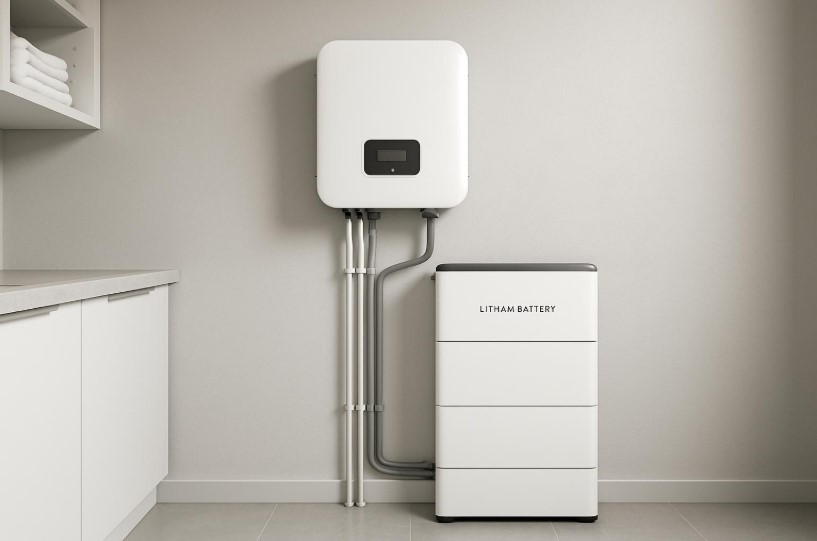
Battery capacity is one of the most important factors influencing the total investment. It determines how much electricity your system can store for later use.
Choosing the correct size is essential because an unnecessarily large battery can increase your initial expenses without providing enough additional financial benefit.
1. 3kWh to 5kWh Solar Battery
A 3kWh to 5kWh solar battery is generally considered a smaller domestic storage option.
It can be suitable for households with relatively low electricity consumption, smaller solar panel installations or homeowners who mainly want to store enough daytime electricity for evening use.
Potential applications include:
- Running household lighting during the evening.
- Powering televisions and smaller electrical appliances.
- Supplying electricity to selected household devices.
- Reducing the amount of electricity purchased from the grid.
The estimated installed cost is approximately £2,500 to £5,000.
However, the actual amount of electricity available will depend on usable battery capacity, charging levels and conversion losses.
2. 5kWh to 10kWh Solar Battery
A 5kWh to 10kWh battery storage system is a popular option for residential properties with moderate electricity requirements.
It can provide additional flexibility for homeowners who generate solar electricity during the day but use more energy during the evening.
For example, a family may generate surplus electricity while everyone is at work or school. Instead of exporting all that unused energy to the electricity grid, the battery can store some of it for later consumption.
Typical uses include:
- Evening lighting and entertainment.
- Refrigerators and other essential appliances.
- Running selected kitchen equipment.
- Reducing peak-time grid electricity consumption.
- Supporting smart electricity tariff strategies.
The estimated installed price is approximately £4,500 to £7,500, depending on the equipment and installation requirements.
3. 10kWh to 15kWh Solar Battery
A 10kWh to 15kWh solar battery offers greater storage capacity and may be suitable for larger properties.
Homes with electric vehicles, heat pumps, electric cooking appliances and higher daily electricity requirements may benefit from a larger system.
A larger battery can store more surplus solar electricity, although it must have sufficient generation or affordable grid charging opportunities to make full use of its capacity.
Typical applications include:
- Supporting higher evening electricity demand.
- Charging electric vehicles when the system is appropriately configured.
- Operating multiple household appliances.
- Increasing the amount of self-generated electricity used at home.
- Reducing reliance on expensive peak-time electricity.
The estimated installed cost is around £7,000 to £12,000.
4. Solar Battery Systems Above 15kWh
Properties with particularly high energy consumption may require storage capacity above 15kWh.
These systems can be useful for larger homes, properties with multiple electric vehicles or households using electricity-intensive heating equipment.
However, installing a large battery does not automatically result in greater savings.
The system needs sufficient solar generation, appropriate inverter capacity and a suitable electricity tariff. Otherwise, some of the battery’s available capacity may remain unused.
Prices can exceed £12,000, particularly where multiple battery modules, additional electrical work or advanced energy management equipment are required.
What Factors Affect Solar Battery Storage Installation Costs?
The price of a solar battery installation is not determined by capacity alone. Several technical and property-related factors influence the final quotation.
Understanding these expenses can help homeowners compare different installers and avoid unexpected costs.
1. Battery Capacity and Usable Storage
Battery capacity determines the quantity of electricity a system can store.
A larger battery generally requires a higher initial investment because it contains more storage cells and may require additional equipment.
However, homeowners should distinguish between nominal capacity and usable capacity.
For example, a battery advertised as 10kWh may have a slightly lower usable capacity depending on its operating limits and manufacturer settings.
When comparing products, check:
- Total battery capacity.
- Usable battery capacity.
- Maximum charging power.
- Maximum discharge power.
- Depth of discharge.
- Round-trip efficiency.
These specifications provide a clearer understanding of how much electricity the system can actually deliver.
2. Battery Manufacturer and Technology
Different manufacturers offer different battery technologies, product specifications, warranties and monitoring features.
Most modern residential systems use lithium-ion technology, particularly lithium iron phosphate (LFP) and nickel manganese cobalt (NMC) batteries.
LFP batteries are widely used in residential storage because of their thermal stability and cycle-life characteristics.
NMC batteries can offer high energy density, which may be useful where installation space is limited.
Premium products may cost more because of their software, battery management systems, warranty arrangements and compatibility with other energy equipment.
Homeowners should compare the manufacturer’s warranty, usable capacity and expected performance instead of selecting a battery based only on its brand name.
3. Solar Inverter Compatibility
A solar inverter converts the direct current (DC) electricity produced by solar panels into alternating current (AC) electricity used by household appliances.
A battery system also needs suitable power conversion equipment.
There are two common installation arrangements:
- Hybrid inverter system: A hybrid inverter manages electricity from solar panels, battery storage and the household electrical system. It can simplify certain installations because several functions are managed by one unit.
- AC-coupled battery system: An AC-coupled battery uses its own inverter and can often be added to an existing solar panel installation without replacing the original solar inverter.
The most suitable arrangement depends on the existing solar equipment and the battery manufacturer’s compatibility requirements.
If an existing inverter needs replacement or additional equipment is required, the overall installation cost may increase.
4. Installation Labour and Electrical Work
Professional installation is another important part of the total cost.
An installer needs to assess the property, identify an appropriate battery location, inspect the electrical system and establish the required connections.
Additional expenses may arise from:
- Consumer unit modifications.
- Electrical protection equipment.
- Additional cabling.
- Inverter replacement.
- Battery mounting equipment.
- System configuration and commissioning.
- Network notification or approval requirements.
A straightforward retrofit installation may cost less than a project involving significant electrical upgrades.
5. Battery Location and Property Requirements
The location of the battery can influence installation expenses.
Most domestic battery systems require a suitable location with appropriate ventilation, temperature conditions, protection from environmental exposure and sufficient space for maintenance.
Depending on the product, batteries may be installed in garages, utility rooms or suitable external locations.
Long cable routes, difficult access or additional mounting requirements can increase labour costs.
The installer should assess the proposed location against the manufacturer’s installation instructions and relevant safety requirements.
6. Monitoring and Smart Energy Management
Modern battery systems can include monitoring applications and intelligent energy management features.
These tools allow homeowners to monitor:
- Solar electricity generation.
- Battery charging levels.
- Household electricity consumption.
- Electricity imported from the grid.
- Electricity exported to the grid.
- Battery charging and discharging schedules.
Some systems can also integrate with smart electricity tariffs to charge when electricity prices are lower and discharge when prices increase.
Advanced monitoring and control equipment may affect the total quotation, depending on the system specification.
What Is Included in a Solar Battery Installation Quote?
When requesting a quotation for Solar Panel Installation UK and Solar Battery Storage UK, homeowners should check exactly what the installer includes.
A complete installation package may contain:
- Battery storage unit and associated modules.
- Compatible inverter or power conversion equipment.
- Battery management system.
- Mounting and electrical protection equipment.
- Installation labour.
- Electrical connections and cabling.
- System configuration and commissioning.
- Monitoring application setup.
- Relevant network notification or approval assistance.
- Installation documentation and warranty information.
Not every quotation includes all these items. Some installers advertise a battery-only price, while others provide a complete supply-and-installation package.
Ask for an itemised quotation so that you can compare the actual cost of each system.
How Much Can You Save with Solar Battery Storage?
One of the main reasons homeowners consider battery storage is the opportunity to reduce electricity purchases from the grid.
Without a battery, surplus solar electricity may be exported to the grid when household demand is low. Homeowners can receive payments for eligible exports through the Smart Export Guarantee (SEG), depending on their electricity supplier and tariff.
With battery storage, some of this surplus electricity can be stored and used later.
This can increase solar self-consumption and reduce the quantity of electricity purchased during more expensive periods.
However, the financial savings depend on household electricity consumption, solar generation, battery efficiency and electricity tariffs.
Example of Potential Annual Savings
Consider a household with the following circumstances:
- Existing solar panel installation.
- 10kWh battery storage system.
- Surplus solar electricity available during daylight hours.
- Regular evening electricity consumption.
- A suitable electricity tariff.
Suppose the battery allows the household to use an additional 2,000kWh of solar electricity annually instead of importing the same amount from the grid.
If the household avoids paying £0.25 per kWh for that electricity, the gross value of avoided imports would be:
2,000kWh × £0.25 = £500 per year.
This is an illustrative calculation, not a guaranteed saving.
The calculation must also account for battery conversion losses and the SEG payments the household may have received for exporting that electricity.
The actual financial benefit can therefore be lower or higher depending on the household’s circumstances.
Can a Solar Battery Reduce Electricity Bills During Winter?
Yes, but the benefits may be more limited during winter.
Solar panels generally produce less electricity during the shorter and cloudier days of winter in the UK.
This means there may be less surplus solar energy available to charge the battery.
Some homeowners use smart electricity tariffs to charge their batteries from the grid during cheaper periods and discharge them during more expensive periods.
This strategy can provide additional financial benefits, provided the tariff structure, battery efficiency and charging restrictions make it worthwhile.
A solar battery should therefore be assessed based on its expected performance throughout the year rather than summer electricity generation alone.
How Long Does It Take for a Solar Battery to Pay for Itself?
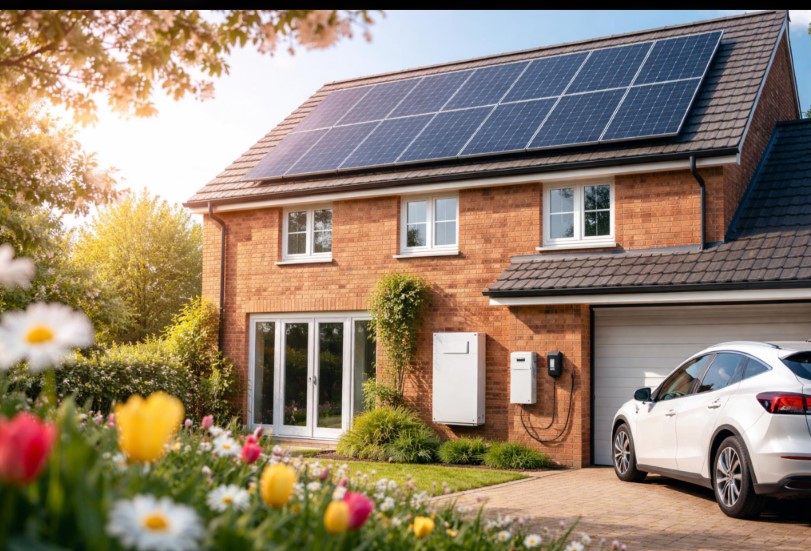
The solar battery payback period is the time required for accumulated financial savings to recover the original installation investment.
There is no single payback period that applies to every UK property.
It depends on:
- Initial battery installation cost.
- Annual electricity bill savings.
- Battery usable capacity.
- Household energy consumption.
- Electricity import and export rates.
- Battery efficiency.
- Battery degradation over time.
- Maintenance and replacement costs.
For example, imagine a homeowner invests £6,000 in a battery storage system.
If the system generates £600 in net annual financial benefits, the simple payback calculation would be:
£6,000 ÷ £600 = 10 years.
This is a simplified example. It does not include future electricity price changes, financing costs, battery degradation or replacement expenses.
Homeowners should request a realistic financial assessment using their actual electricity bills and expected solar generation.
Is Solar Battery Storage Worth It in the UK in 2026?
Solar battery storage can be a worthwhile investment for homeowners who generate surplus solar electricity and regularly consume electricity after sunset.
It can also provide opportunities to benefit from time-of-use electricity tariffs.
However, a battery is not automatically financially beneficial for every property.
It may be particularly suitable for:
- Households with existing solar panels.
- Families with high evening electricity consumption.
- Properties with suitable smart electricity tariffs.
- Homeowners who want to increase solar self-consumption.
- Households with electric vehicles or heat pumps.
- People interested in reducing their dependence on grid electricity.
On the other hand, homeowners with low electricity consumption or limited surplus solar generation may struggle to recover the additional investment.
Before purchasing a battery, compare the expected financial savings against the installation price and the value of electricity you could otherwise export.
What Is the VAT on Solar Battery Storage in the UK in 2026?
VAT is an important consideration when calculating the overall cost of domestic battery storage.
Under current UK rules, qualifying installations of electrical storage batteries in residential accommodation benefit from a temporary 0% VAT rate until 31 March 2027.
This relief applies to qualifying battery installations, including:
- Batteries retrofitted to existing solar panel systems.
- Standalone electrical storage batteries.
- Batteries that store electricity from solar panels and the electricity grid.
However, the VAT treatment depends on the nature of the supply and installation.
For example, a retailer selling a battery without installing it generally charges standard-rate VAT on the equipment.
Where an eligible installer supplies and installs the battery, the qualifying installation may benefit from zero-rated VAT.
This means homeowners considering a battery installation in 2026 should ask their installer to explain the VAT treatment in the quotation.
The current relief is scheduled to end on 31 March 2027, after which the reduced 5% rate is expected to apply to qualifying installations.
Always check the latest HMRC guidance before making a purchasing decision.
Are There Any Grants for Solar Battery Storage in the UK?
Financial assistance may be available to certain households through government-supported energy-efficiency programmes.
However, homeowners should not assume that every solar battery installation qualifies for a grant.
The Warm Homes: Local Grant supports eligible energy improvements for qualifying low-income households in England. Funding availability and eligible measures depend on the programme requirements and local authority arrangements.
The Warm Homes: Social Housing Fund also supports energy improvements in social housing properties.
Whether battery storage is included in a particular project depends on the funding rules and the measures approved for that property.
Homeowners should check their eligibility and contact their local authority before including a grant in their installation budget.
A grant should only be included in a financial calculation once eligibility and funding have been confirmed.
Solar Battery Storage vs Solar Panels: What Is the Difference?
Solar panels and battery storage perform different functions within a domestic renewable energy system.
Solar panels generate electricity from sunlight, while a battery stores electricity for later use.
Understanding this distinction helps homeowners decide whether they need solar panels, battery storage or a combined installation.
| Feature | Solar Panels | Solar Battery Storage |
|---|---|---|
| Main function | Generate electricity | Store electricity |
| Energy source | Sunlight | Solar generation or grid electricity |
| Daytime use | Supplies household electricity | Charges using available electricity |
| Evening use | Limited without storage | Supplies stored electricity |
| Electricity export | Can export surplus generation | Can reduce immediate exports |
| Main financial benefit | Generate electricity at home | Increase self-consumption and tariff flexibility |
Combining solar panels with battery storage can create a more flexible household energy system.
However, the correct combination depends on the property’s electricity requirements and available roof space.
What Type of Solar Battery Is Best for UK Homes?
There are several battery technologies available for domestic energy storage.
The best option depends on available space, budget, capacity requirements, expected usage and manufacturer specifications.
Lithium Iron Phosphate (LFP) Batteries
LFP batteries are a type of lithium-ion battery commonly used in residential energy storage.
They are known for their thermal stability and long cycle-life characteristics.
Many homeowners consider LFP systems because they offer a practical combination of storage capacity, safety features and long-term performance.
Nickel Manganese Cobalt (NMC) Batteries
NMC batteries are another lithium-ion technology.
They offer relatively high energy density, which can make them suitable for installations where space is restricted.
Their performance, operating conditions and warranty arrangements vary between manufacturers.
Modular Battery Storage Systems
Modular batteries allow homeowners to expand storage capacity by adding compatible battery units.
For example, a homeowner might begin with a smaller system and increase its capacity later if electricity consumption rises.
However, future expansion is not guaranteed for every product. Compatibility, inverter capacity and manufacturer support should be checked before installation.
What Should You Check Before Buying a Solar Battery?
Choosing the right system requires more than comparing advertised prices.
A battery should match your electricity usage, solar generation and long-term household requirements.
Consider the following points before agreeing to an installation:
1. Usable battery capacity: Check how much stored electricity is available for household use rather than relying only on the advertised nominal capacity.
2. Battery warranty: Review the warranty period, throughput limits and conditions relating to battery performance.
3. Inverter compatibility: Confirm whether your existing solar inverter can work with the proposed battery.
4. Charging and discharging power: Check whether the system can supply electricity at a rate suitable for your household appliances.
5. Battery efficiency: Review the round-trip efficiency to understand how much electricity is lost during charging and discharging.
6. Installation standards: Choose a suitably qualified installer with relevant experience and appropriate electrical credentials.
7. Monitoring features: Check whether the system includes an application that allows you to monitor energy generation, storage and consumption.
8. Future expansion: If your household may require additional capacity, check whether the battery can be expanded.
9. Complete installation price: Ask whether the quotation includes electrical work, commissioning, protection equipment and network-related requirements.
10. Financial assessment: Request an estimate of annual savings based on your actual energy usage and tariff.
How Can Solar Xtra Help with Solar Battery Storage?
Choosing the right solar battery involves understanding your property’s electricity requirements, existing solar equipment and future energy needs.
Solar Xtra provides renewable energy solutions for UK customers, including solar panel systems and battery storage solutions.
Whether you already have solar panels or are considering a new solar installation, selecting compatible equipment and arranging professional installation are important steps.
Solar Xtra can help customers consider the following aspects of a residential energy project:
- Solar Battery Storage: Explore battery options according to household electricity consumption and storage requirements.
- Solar Panel Installation: Consider a solar generation system designed around available roof space and energy requirements.
- Battery and Inverter Compatibility: Assess the relationship between existing solar equipment and proposed storage technology.
- Energy Monitoring: Understand how monitoring systems can help track solar generation, battery charging and household electricity consumption.
- System Design: Consider battery capacity, installation location and the property’s electrical requirements.
- Installation Planning: Review the technical requirements before proceeding with a domestic renewable energy project.
The right system should be selected according to your property’s actual energy requirements rather than simply choosing the largest battery available.
If you are planning to install solar panels or add battery storage to an existing system, contact Solar Xtra to discuss your requirements and request an installation assessment.
Conclusion: Is 2026 a Good Time to Invest in Solar Battery Storage?
The cost of solar battery storage in UK in 2026 depends on battery capacity, technology, installation requirements and inverter compatibility.
Most domestic installations fall within an indicative range of £2,500 to £12,000, although larger or more complex projects can cost more.
A smaller battery may be sufficient for households with modest electricity requirements, while properties with electric vehicles, heat pumps or higher consumption may benefit from additional storage capacity.
Battery storage can help households use more of their own solar electricity, reduce grid imports and take advantage of suitable smart electricity tariffs.
However, the financial benefits depend on individual energy consumption, electricity prices and installation costs.
Before making a decision, compare several quotations, check the usable battery capacity, review the warranty and request a realistic savings calculation.
Solar Extra can help UK homeowners consider suitable solar panel and battery storage solutions based on their property and energy requirements.
FAQs – Solar Battery Storage Cost UK
1. How much does a solar battery cost in the UK in 2026?
A domestic solar battery installation generally costs between £2,500 and £12,000 in 2026. Smaller 3–5kWh systems are usually less expensive, while larger 10–15kWh systems require a higher investment. The final price depends on battery technology, manufacturer, inverter compatibility and installation requirements.
2. How much does a 5kWh solar battery cost in the UK?
A 5kWh solar battery can cost approximately £2,500 to £5,000 based on indicative market price guides. However, published installation statistics show that the median price for systems below 6kWh can be higher. Always compare complete installation quotations.
3. How much does a 10kWh solar battery cost?
A 10kWh solar battery installation may cost approximately £4,500 to £9,000 or more, depending on the battery brand, inverter and installation arrangements. Additional electrical work can increase the total price.
4. Is solar battery storage worth buying in the UK?
Solar battery storage can be worthwhile for households that generate surplus solar electricity and use significant amounts of electricity during the evening. It can reduce grid electricity purchases and provide opportunities to benefit from time-of-use tariffs. Its financial value depends on the installation cost and household consumption.
5. Can I add a battery to my existing solar panels?
Yes. Many existing solar panel systems can be upgraded with battery storage. An installer will need to check inverter compatibility, electrical connections and available installation space. Depending on the existing equipment, an AC-coupled battery or inverter upgrade may be required.
6. How long does a solar battery last?
The lifespan depends on battery chemistry, usage, operating temperature and manufacturer specifications. Many modern home batteries are designed to operate for approximately 10–15 years, although actual performance varies. Check the warranty period, cycle limits and guaranteed remaining capacity.
7. Do solar batteries work during winter in the UK?
Yes. Solar batteries can operate during winter, but shorter daylight hours and lower solar generation may reduce the amount of electricity available for storage. Some battery systems can also charge from the electricity grid when cheaper tariffs are available.
8. Is solar battery installation VAT-free in the UK in 2026?
Qualifying residential electrical storage battery installations currently benefit from a 0% VAT rate until 31 March 2027. However, buying a battery separately without installation is generally subject to standard-rate VAT. The exact VAT treatment depends on the supply arrangement.
9. Can a solar battery reduce my electricity bills?
Yes. A battery can store surplus solar electricity and make it available when your solar panels are not generating enough power. This can reduce electricity imports from the grid. The amount saved depends on battery capacity, household usage, electricity tariffs and charging efficiency.
10. What size solar battery do I need for a three-bedroom house?
A 5–10kWh battery may be a reasonable starting point for a typical three-bedroom household. However, the correct size depends on daily electricity consumption, existing solar panel generation and evening energy requirements. An installer should assess your electricity usage before recommending a capacity.
11. Can I charge my solar battery using cheap electricity from the grid?
Yes. Many compatible battery systems allow grid charging. Homeowners with suitable time-of-use tariffs can charge their batteries during cheaper periods and use the stored electricity when grid prices are higher. Check tariff restrictions, battery settings and efficiency before relying on this strategy.
12. Do solar batteries require regular maintenance?
Most modern residential battery systems require relatively little routine maintenance. However, homeowners should monitor system performance, check manufacturer recommendations and arrange professional inspections when necessary. Battery condition, installation safety and software updates should also be considered.
13. Are solar battery grants available in the UK?
Some government-supported home energy programmes provide funding for eligible energy improvements. However, standalone battery storage is not automatically covered by every scheme. Homeowners should check current eligibility requirements and local authority funding conditions before making financial plans.
14. Can a solar battery power an entire house?
A correctly sized battery may supply a large proportion of a home’s electricity requirements, but this depends on its usable capacity and maximum discharge power. High-demand appliances may require more power than a particular battery can provide. Whole-house backup also requires suitable inverter and backup arrangements.
15. Should I install solar panels and battery storage together?
Installing both together can be convenient because the equipment can be designed as one integrated system. However, adding a battery later is also possible in many cases. The best option depends on your budget, existing equipment, electricity usage and long-term energy plans.
Want to know what solar would save on your own roof?
Book Your Free Survey