How Long Do Solar Panels Last UK
How Long Do Solar Panels Last UK – A Complete Guide
Solar panels are a long-term investment for homeowners looking to generate renewable electricity, reduce household energy bills and become less dependent on the National Grid. However, before arranging a solar panel installation, one important question often comes to mind: how long will solar panels actually last?
Modern solar panels are designed to operate for decades. Many residential solar photovoltaic (PV) panels have an expected working life of 25 to 30 years or longer. However, their electricity production gradually decreases as they age. This process is known as solar panel degradation.
The actual solar panel lifespan UK homeowners can expect depends on several factors, including panel quality, installation standards, weather exposure, maintenance and the performance of other system components.
It is also important to understand that solar panels, inverters and battery storage systems do not all have the same life expectancy. While the panels may continue generating electricity for decades, an inverter or battery might require replacement earlier.
At Solar Xtra, we help homeowners understand and plan renewable energy installations, including solar panels, battery storage systems, solar monitoring and other energy-efficient solutions.
In this article, we explain the average lifespan of solar panels, how their performance changes over time, what affects their durability and how homeowners can maintain their systems for long-term performance.
How Long Do Solar Panels Last in the UK?
Most modern solar panels are designed to last approximately 25 to 30 years, and many can continue generating electricity beyond this period.
The important thing to understand is that solar panels do not suddenly stop working when they reach 25 years of age. Instead, their ability to convert sunlight into electricity gradually decreases.
For example, a solar panel installed today may produce slightly less electricity after 10, 15 or 20 years than it did when it was first commissioned. However, it can still provide useful electricity throughout its working life.
According to the Energy Saving Trust, solar panels should last 25 years or more. Their actual performance depends on the equipment, installation and maintenance. Energy Saving Trust+1
Average Lifespan of Solar Panels
Here is an illustrative overview of the expected working life of different solar system components.
| Solar System Component | Typical Expected Lifespan |
|---|---|
| Solar panels | 25–30 years or longer |
| String inverter | Around 10–15 years |
| Microinverters | Often 20–25 years, depending on model |
| Solar battery | Often around 10–15 years, depending on technology and usage |
| Solar mounting system | Several decades with suitable installation and maintenance |
| Electrical connections | Depends on component quality and installation conditions |
These are general planning estimates, not guaranteed service lives. Manufacturer warranties and actual product specifications should always be checked.
Do Solar Panels Stop Working After 25 Years?
No. The 25-year period commonly associated with solar panels is often related to their performance warranty rather than a fixed expiry date.
After this period, panels may continue generating electricity, although their output may be lower than when they were first installed.
Homeowners should assess the actual performance and condition of their existing system before deciding whether replacement is necessary.
What Is the Average Life Expectancy of Different Solar Panels?
Different solar panel technologies have different construction methods, efficiency levels and manufacturer specifications. However, the overall lifespan also depends on installation quality and operating conditions.
Monocrystalline Solar Panels
Monocrystalline solar panels are manufactured using high-purity silicon crystals. They are commonly used in modern residential solar installations because they offer relatively high efficiency and good electricity generation from limited roof space.
Their main characteristics include:
- High power output relative to panel size.
- Good performance in residential installations.
- Long-term electricity generation.
- Generally dark or black appearance.
- Different product and performance warranty options.
A quality monocrystalline panel can commonly have a design life of 25 to 30 years or longer.
Polycrystalline Solar Panels
Polycrystalline solar panels are manufactured using multiple silicon crystals.
They traditionally have a blue appearance and are generally less efficient than comparable modern monocrystalline panels.
Their lifespan can also reach 25 years or more, depending on the product specification, installation and environmental conditions.
Which Solar Panels Last Longer?
The lifespan of a solar panel cannot be determined by its technology type alone.
Homeowners should compare:
- Manufacturer reputation.
- Product construction and materials.
- Product warranty period.
- Performance warranty conditions.
- Guaranteed power output.
- Resistance to environmental conditions.
- Installer experience and workmanship.
Choosing a suitable panel based on technical specifications is more useful than relying on a single advertised lifespan figure.
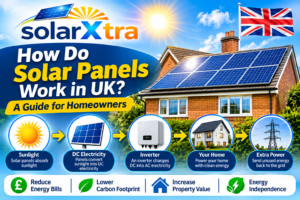
Read More About; How Do Solar Panels Work in UK? Guide for Homeowners
What Is Solar Panel Degradation and How Does It Affect Performance?
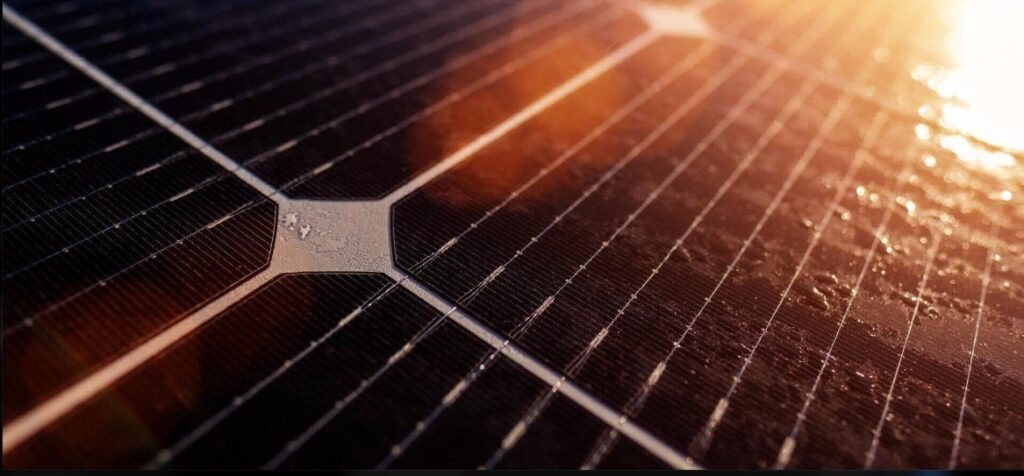
Solar panel degradation is the gradual reduction in a panel’s ability to generate electricity over time.
When new solar panels are installed, they are designed to produce electricity according to their rated capacity under standard test conditions. As the years pass, exposure to sunlight, temperature changes and environmental conditions can gradually affect their performance.
This does not mean that the panels become unusable. Instead, their electricity output slowly decreases.
What Is the Average Solar Panel Degradation Rate?
Many modern solar panels have an annual degradation rate of approximately 0.3% to 0.5%, although the actual figure varies by manufacturer and panel technology.
Some products may experience a higher initial reduction during their first year, followed by a slower annual decline.
For example, consider a hypothetical 400-watt panel with an annual degradation rate of 0.4%, using a simplified calculation.
| Panel Age | Illustrative Remaining Rated Output |
|---|---|
| New installation | 400 W |
| After 5 years | 392 W |
| After 10 years | 384 W |
| After 15 years | 376 W |
| After 20 years | 369 W |
| After 25 years | 362 W |
| After 30 years | 355 W |
Illustrative calculation assuming a constant 0.4% annual reduction from the initial rating. Actual manufacturer degradation models may use different first-year and subsequent-year rates.
Does Solar Panel Efficiency Decrease Every Year?
Solar panel efficiency can gradually decrease as photovoltaic cells age.
However, the actual electricity production of a complete solar system can fluctuate from year to year because of:
- Changes in weather.
- Seasonal daylight variations.
- Roof shading.
- Dirt and debris.
- Temperature conditions.
- Inverter performance.
- Electrical faults.
Therefore, a reduction in one month’s electricity generation does not necessarily mean the solar panels are degrading.
Homeowners should compare annual generation figures under similar conditions to identify longer-term performance changes.
What Factors Affect Solar Panel Lifespan in the UK?
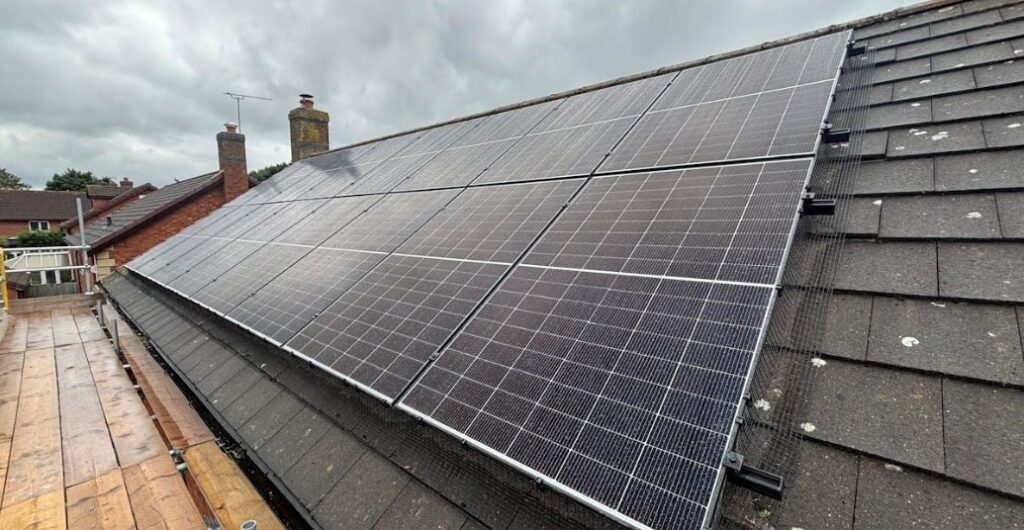
The solar panel life expectancy of a residential installation depends on more than the manufacturer’s advertised lifespan.
Several environmental, technical and installation-related factors influence how long the equipment continues to operate effectively.
1. Solar Panel Quality
The quality of photovoltaic cells, protective glass, frames, junction boxes and electrical connections affects long-term durability.
High-quality panels are designed to withstand outdoor conditions, but homeowners should still compare product specifications and warranty terms before installation.
2. Professional Solar Panel Installation
Installation quality plays an important role in the overall lifespan of a solar PV system.
Incorrect mounting, poorly secured panels, unsuitable roof fixings and improper electrical connections can lead to avoidable problems.
A professional solar panel installation should account for:
- Roof structure and condition.
- Suitable mounting equipment.
- Secure electrical connections.
- Appropriate weatherproofing.
- Correct inverter configuration.
- Electrical safety requirements.
3. UK Weather Conditions
Solar panels installed in the UK experience changing weather throughout the year.
They may be exposed to:
- Rainfall.
- Strong winds.
- Snow and frost.
- Temperature fluctuations.
- UV radiation.
- Hail and airborne debris.
Modern solar panels are designed for outdoor use, but severe weather or physical damage can affect their condition.
4. Roof Orientation and Shading
Roof orientation and shading influence how much sunlight reaches photovoltaic cells.
Nearby trees, chimneys and neighbouring buildings can reduce solar electricity generation.
Although shading does not necessarily shorten the physical lifespan of a panel, it can affect the overall performance of the system.
5. Maintenance and Inspection
Solar panels generally require relatively little maintenance, but regular checks can help identify problems before they become more serious.
Loose connections, damaged cables, dirt accumulation and inverter faults can affect electricity production.
6. Temperature and Ventilation
Solar panels operate outdoors and experience different temperatures throughout the year.
Excessive heat can temporarily reduce electrical performance, while appropriate ventilation behind roof-mounted panels helps manage operating temperatures.
7. Installation Environment
The property’s surrounding environment can also influence equipment condition.
Homes near busy roads, trees, farmland or coastal areas may experience additional dirt accumulation, bird activity or environmental exposure.
These conditions should be considered when planning maintenance.
Read More About; How Much Do Solar Panels Cost in UK in 2026?
How Long Does a Solar Inverter Last?
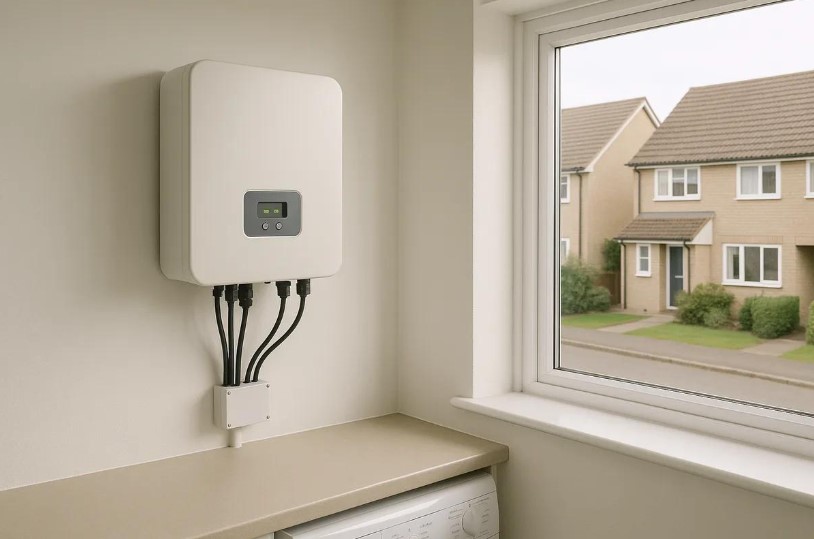
Solar panels are usually the longest-lasting components of a residential solar PV system. However, the inverter generally has a shorter working life.
A typical string inverter may last around 10 to 15 years, although the exact lifespan depends on its quality, operating environment, usage and maintenance.
The inverter is responsible for converting the direct current (DC) electricity generated by solar panels into alternating current (AC) electricity that household appliances can use.
Why Does a Solar Inverter Need Replacement?
Unlike solar panels, inverters contain electronic components that can experience wear and failure during normal operation.
Common reasons for inverter replacement include:
- Electronic component failure.
- Excessive operating temperatures.
- Electrical faults.
- Internal cooling problems.
- Age-related deterioration.
- Outdated equipment or unavailable replacement parts.
Signs That Your Solar Inverter May Need Attention
Homeowners should look out for:
- Unexpected inverter shutdowns.
- Warning lights or fault messages.
- Sudden reductions in solar generation.
- Monitoring applications showing missing data.
- Repeated system disconnections.
Not every warning means the inverter needs replacing. Some issues may be resolved through professional inspection or repair.
The Energy Saving Trust estimates that an inverter may need replacement after around 12 years, although individual products vary. Energy Saving Trust+1
How Long Does Solar Battery Storage Last?
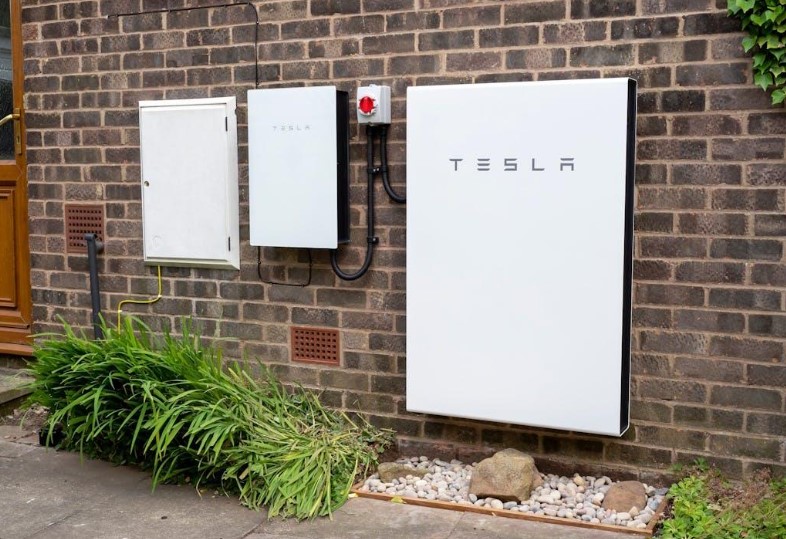
Solar battery storage allows homeowners to store unused solar electricity for use when their panels are generating less power.
However, batteries have a different working life from solar panels.
Many residential solar batteries are designed to last approximately 10 to 15 years, depending on the battery chemistry, operating temperature, charging cycles, usage and manufacturer specifications.
What Affects Solar Battery Lifespan?
Battery Chemistry: Different battery technologies have different cycle-life characteristics and operating requirements.
- Charging and Discharging: Frequent charging and discharging can gradually reduce the battery’s usable capacity.
- Operating Temperature: Excessive heat or unsuitable temperatures can affect battery performance and longevity.
- Depth of Discharge: Regularly using a large proportion of the available battery capacity can influence long-term degradation.
- Battery Management System: A suitable battery management system helps control charging, discharging and operating conditions.
Does a Solar Battery Stop Working After Its Warranty Expires?
Not necessarily.
A battery may continue operating after its warranty period, although its usable storage capacity may have decreased.
Homeowners should check the manufacturer’s warranty for guaranteed capacity, cycle limits, throughput limits and other conditions.
Read More About; How Much Does Solar Battery Storage Cost in UK 2026?
What Is the Difference Between a Solar Panel Product Warranty and Performance Warranty?
Understanding solar panel warranties is important when evaluating the expected lifespan of a system.
Manufacturers commonly provide different warranties covering the physical equipment and its long-term electricity generation.
Product Warranty
A product warranty covers specified manufacturing and material defects.
Depending on the manufacturer’s terms, this may include problems involving:
- Panel frame construction.
- Junction box defects.
- Material deterioration.
- Delamination.
- Manufacturing faults.
The length of product warranties varies by brand and model.
Performance Warranty
A performance warranty relates to the amount of electricity a panel is expected to generate over a specified period.
For example, a manufacturer may guarantee that a panel retains a particular percentage of its original rated output after 25 or 30 years.
This is different from guaranteeing that the panel will generate exactly the same amount of electricity every year.
What Should Homeowners Check Before Choosing Solar Panels?
Before arranging an installation, review:
| Warranty Element | What to Check |
|---|---|
| Product warranty | Coverage against manufacturing defects |
| Performance warranty | Guaranteed remaining output |
| Warranty duration | Number of years covered |
| Exclusions | Conditions that may invalidate coverage |
| Replacement policy | Repair, replacement or compensation terms |
| Labour coverage | Whether removal and installation costs are included |
| Installer warranty | Workmanship and installation coverage |
A longer warranty can be useful, but homeowners should also consider the manufacturer’s financial stability, warranty conditions and the process for making a claim.
How Can You Extend the Lifespan of Solar Panels?
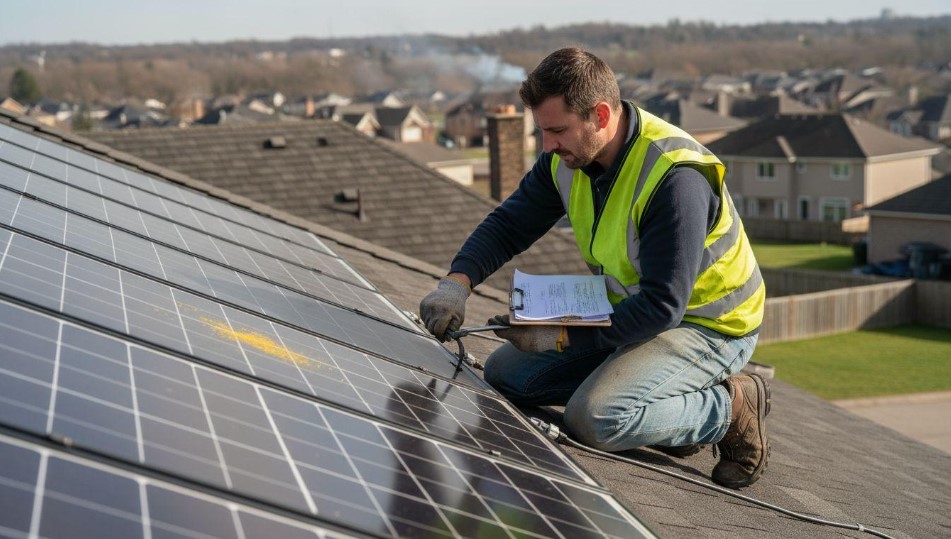
Although solar panels are designed for long-term outdoor operation, appropriate maintenance can help preserve their condition and performance.
Here are practical steps homeowners can follow.
Keep Solar Panels Clean
Dirt, bird droppings, leaves and other debris can prevent sunlight from reaching photovoltaic cells.
In many UK locations, rainfall removes much of the accumulated dirt. However, occasional cleaning may be necessary where visible deposits remain.
The Energy Saving Trust recommends checking panels periodically and cleaning them when needed rather than assuming frequent professional cleaning is essential. Energy Saving Trust
Arrange Regular System Inspections
A professional inspection can help identify:
- Damaged panels.
- Loose mounting components.
- Cable deterioration.
- Electrical connection problems.
- Inverter faults.
- Water ingress.
- Unexpected performance reductions.
The inspection schedule should follow the equipment manufacturer’s recommendations and the installer’s maintenance guidance.
Monitor Solar Electricity Generation
Modern solar monitoring systems allow homeowners to check how much electricity their installations generate.
Regular monitoring can help identify unusual performance changes and potential equipment problems.
Reduce Unnecessary Shading
Overhanging branches and nearby vegetation can affect solar generation.
Where practical, maintain nearby trees and remove avoidable obstructions that create shading.
Check the Mounting System
The solar mounting system keeps panels securely attached to the roof.
Visible signs of damage, movement or corrosion should be investigated by a qualified professional.
Homeowners should not climb onto roofs to carry out inspections themselves.
Follow Manufacturer Instructions
Different solar panels, inverters and battery storage products have specific maintenance requirements.
Following the manufacturer’s instructions helps protect equipment and maintain applicable warranty coverage.
When Should You Replace Old Solar Panels?
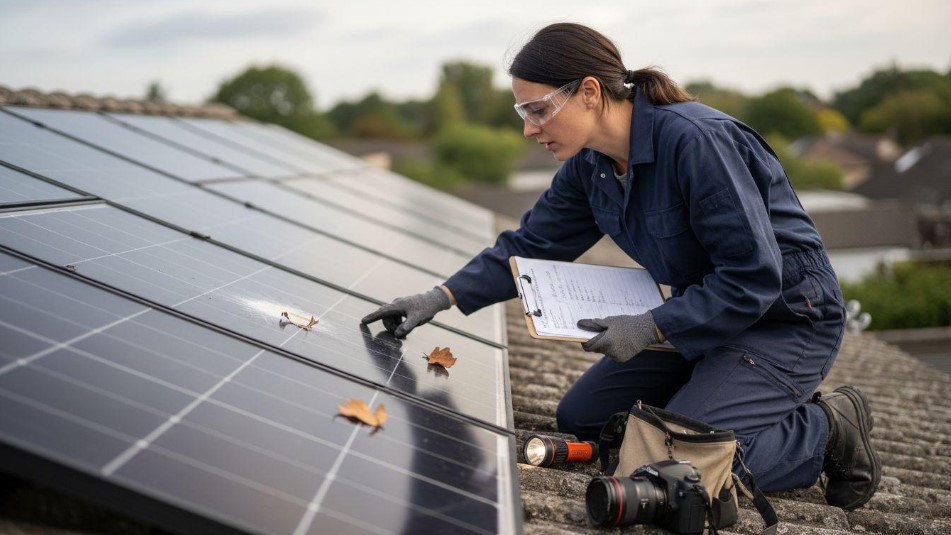
Solar panels do not necessarily need replacement simply because they have reached 25 years of age.
If the system remains safe, reliable and capable of producing sufficient electricity, it may continue operating beyond its original performance warranty.
However, there are situations when replacing older panels or upgrading the complete system may be a sensible option.
Signs That Solar Panels May Need Replacement
- Visible cracks in the panel glass.
- Damaged frames or protective layers.
- Persistent electrical faults.
- Significant and unexplained generation reductions.
- Water ingress or corrosion.
- Repeated equipment failures.
- Replacement parts becoming difficult to obtain.
A professional assessment should establish whether the problem can be repaired or whether replacement is more appropriate.
Should You Replace Solar Panels After 25 Years?
Not automatically.
Before replacing an older system, homeowners should consider:
- Current electricity generation.
- Remaining panel condition.
- Repair and replacement costs.
- Current household energy consumption.
- Efficiency of available replacement panels.
- Existing inverter compatibility.
- Roof condition and future renovation plans.
Newer panels may generate more electricity from the same roof area, but the financial case for replacement depends on the condition and output of the existing system.
How Much Does Solar Panel Maintenance and Replacement Cost in the UK?
The cost of maintaining or replacing solar equipment depends on the system size, product type, installation requirements and the nature of the problem.
It is important to distinguish between routine maintenance and major component replacement.
Solar Panel Cleaning Costs
Cleaning costs depend on roof access, system size and the amount of dirt or debris.
Some homeowners may not need professional cleaning regularly because rainfall can remove ordinary surface dirt.
The Energy Saving Trust reports that professional solar panel cleaning can typically start at around £60–£100 for a standard system, although prices vary. Energy Saving Trust
Solar Inverter Replacement Costs
An inverter replacement can be one of the main expenses during the working life of a solar PV system.
The final cost depends on:
- Inverter type.
- System capacity.
- Manufacturer.
- Electrical requirements.
- Labour and installation complexity.
- Whether additional equipment is needed.
Solar Panel Replacement Costs
Replacing individual panels may be possible when damage is limited to specific modules.
However, compatibility with the existing inverter, electrical configuration and mounting equipment should be assessed first.
Replacing an entire system may be more appropriate when panels are extensively damaged or the existing installation is no longer suitable.
Is Solar Panel Replacement Worth It?
The decision should be based on the expected additional electricity generation, replacement costs, remaining equipment life and potential household savings.
A professional assessment can help homeowners compare repair, partial replacement and full system upgrades.
How Does Regular Solar Panel Maintenance Protect Your Investment?
Solar panel maintenance is important because a residential solar PV installation is designed to generate electricity over many years.
Although photovoltaic panels have no moving parts, the complete system includes electrical equipment, mounting components, cables and an inverter that require appropriate attention.
A practical maintenance routine can help homeowners:
- Identify faults at an early stage.
- Maintain consistent electricity generation.
- Reduce avoidable equipment problems.
- Monitor solar panel performance over time.
- Protect the condition of the installation.
- Identify when inverter replacement may be necessary.
- Maintain applicable manufacturer warranty requirements.
Recommended Solar Panel Maintenance Schedule
| Maintenance Activity | Suggested Frequency |
|---|---|
| Check solar monitoring data | Monthly |
| Look for visible panel damage | Every 6–12 months |
| Check for excessive dirt and debris | Every 6–12 months |
| Professional system inspection | According to installer guidance |
| Check inverter operation | Regularly through monitoring |
| Review battery performance | Regularly through monitoring |
| Review manufacturer warranties | Annually |
This is a general maintenance schedule, not a substitute for manufacturer instructions or a site-specific maintenance plan.
Is Investing in Solar Panels Worth It for the Long Term?
Solar panels can provide long-term electricity generation for homeowners who want to reduce their reliance on conventional electricity supplies.
The expected lifespan of modern photovoltaic panels means that a properly designed installation can continue generating electricity for many years after its initial installation.
However, the overall financial value depends on several factors.
Long-Term Solar Energy Savings
Solar panels can reduce the amount of electricity a household purchases from its energy supplier.
The level of savings depends on:
- Initial installation cost.
- Annual solar electricity generation.
- Household electricity consumption.
- Electricity import tariffs.
- Amount of solar electricity used directly.
- Available export payments.
- Battery storage arrangements.
- Maintenance and replacement expenses.
Greater Use of Renewable Energy
Solar panels generate electricity from sunlight without burning fossil fuels during operation.
This gives homeowners an opportunity to use renewable energy and reduce the carbon emissions associated with their electricity consumption.
Compatibility With Battery Storage
Solar panels can be combined with battery storage to make better use of electricity generated during daylight hours.
A suitable battery can store unused solar electricity for later consumption, helping households manage energy demand in the evening.
A Long-Term Property Energy Solution
For homeowners planning to remain in their properties for many years, solar panel installation can be part of a wider household energy strategy.
The system should be designed around current electricity requirements and potential future changes, such as electric vehicle charging or battery storage.
Why Choose Solar Xtra for Solar Panel Installation in the UK?
Choosing the right installation company is an important step when planning a long-term solar energy system.
A successful installation requires suitable equipment, professional system design, secure mounting arrangements and correct electrical connections.
Solar Xtra provides renewable energy installation solutions for residential and commercial properties, with services including:
- Solar panel installation.
- Solar battery storage installation.
- Solar inverter installation.
- Solar monitoring systems.
- Commercial solar installation.
- Air source heat pump installation.
- Solid wall insulation.
Our approach focuses on understanding the property’s requirements and identifying suitable renewable energy solutions.
Whether you are planning a new residential solar PV installation or considering battery storage alongside existing solar panels, choosing an appropriate system can help you make better use of renewable electricity.
Planning a Solar Panel Installation?
Before proceeding, consider the roof condition, available space, expected electricity consumption and future energy requirements.
A professional assessment can help establish the appropriate system capacity, panel arrangement, inverter specifications and potential battery storage requirements.
If you are considering solar panel installation for your home or business, contact Solar Xtra to discuss your renewable energy requirements.
Read More About; How Long Do Solar Panels Last UK
Frequently Asked Questions
These FAQs target additional long-tail keywords and common questions UK homeowners search for.
1. How long do solar panels last in the UK?
Most modern solar panels last approximately 25 to 30 years or longer. Their electricity output gradually decreases over time, but they do not automatically stop working when their performance warranty expires.
2. What is the average lifespan of residential solar panels?
The average working life of residential solar panels is generally around 25–30 years. Some installations can continue generating electricity beyond this period, depending on equipment quality, installation and maintenance.
3. Do solar panels stop working after 25 years?
No. Solar panels do not suddenly stop generating electricity after 25 years. Their output gradually decreases, and they can continue producing usable electricity beyond their original warranty period.
4. What is the average solar panel degradation rate?
Many modern solar panels experience an annual degradation rate of approximately 0.3%–0.5%. The actual rate depends on the manufacturer, panel technology and environmental conditions.
5. How long does a solar inverter last in the UK?
A typical string inverter may last approximately 10–15 years. Some models may operate for longer, while others may require earlier replacement depending on usage and operating conditions.
6. How long does solar battery storage last?
Many residential solar batteries are designed to operate for around 10–15 years. Their lifespan depends on battery chemistry, charging cycles, operating temperature and usage patterns.
7. Does solar panel efficiency decrease over time?
Yes. Solar panel efficiency gradually decreases as photovoltaic cells age. However, modern panels are designed to maintain useful electricity generation for several decades.
8. Can solar panels last 40 years?
Some solar panels may continue generating electricity after 40 years, but their actual performance and condition will depend on their original quality, installation and maintenance. Forty years should not be treated as a guaranteed lifespan.
9. Do solar panels need regular maintenance?
Solar panels require relatively little maintenance. However, homeowners should monitor system performance, check for visible damage and arrange cleaning or professional inspections when needed.
10. When should I replace my old solar panels?
Solar panels should be assessed for replacement when they have significant physical damage, persistent faults or substantially reduced electricity generation. Age alone is not sufficient reason to replace a functioning system.
11. Does bad UK weather shorten solar panel lifespan?
Modern solar panels are designed for outdoor conditions, including rain, wind and changing temperatures. However, severe weather, physical damage and poor installation can affect their condition and longevity.
12. Are solar panels worth installing if they last only 25 years?
Solar panels can provide long-term financial and environmental benefits throughout their working life. Their value depends on installation costs, electricity generation, household consumption, energy tariffs and maintenance expenses.
Want to know what solar would save on your own roof?
Book Your Free Survey