How Much Can Solar Panels Generate Electricity Per Day UK?
Solar Panels Generate Electricity Per Day UK
Solar panels are becoming an increasingly popular choice for UK homeowners looking to generate their own electricity, reduce reliance on the national grid and manage household energy costs. However, before investing in a solar PV system, one of the most common questions is: How much can solar panels generate electricity per day?
The amount of electricity produced by solar panels depends on several factors, including the system’s capacity, roof direction, installation angle, daylight hours, weather conditions and panel efficiency. A small residential system will naturally generate less electricity than a larger system installed on a property with suitable roof space.
In the UK, solar electricity generation also changes throughout the year. Longer daylight hours during spring and summer generally result in higher production, while shorter days and lower sunlight levels during autumn and winter can reduce daily output.
Understanding solar panel daily output can help you choose an appropriate system size for your property and household electricity requirements.
How Much Electricity Can Solar Panels Generate Per Day in the UK?
The daily electricity production of a solar panel system depends mainly on its installed capacity and the amount of sunlight available.
In the UK, a properly designed and installed solar PV system can generate different amounts of electricity depending on its location, orientation, shading and seasonal conditions.
For example, a 4kW solar panel system may generate approximately 8–16 kWh on a typical productive day, although actual output can be significantly lower in winter and higher during favourable summer conditions.
The following table provides illustrative daily generation ranges for residential solar systems.
Average Daily Solar Panel Electricity Generation
| Solar System Size | Approximate Daily Output |
|---|---|
| 2kW solar system | 4–8 kWh |
| 3kW solar system | 6–12 kWh |
| 4kW solar system | 8–16 kWh |
| 5kW solar system | 10–20 kWh |
| 6kW solar system | 12–24 kWh |
| 8kW solar system | 16–32 kWh |
| 10kW solar system | 20–40 kWh |
These are illustrative productive-day estimates, not guaranteed UK daily averages. Actual electricity generation varies with location, season, shading, panel orientation, weather and system performance.
A solar panel system does not produce the same amount of electricity every day. During sunny summer periods, a system may generate considerably more electricity than it does during a cloudy winter afternoon.
For a more accurate estimate, homeowners should consider their property’s location, available roof space and expected annual solar generation rather than relying on system size alone.
How Much Electricity Does a Single Solar Panel Produce Per Day?
Individual solar panels have different power ratings, commonly ranging from approximately 350W to 450W or more for residential installations.
A panel’s wattage indicates its maximum rated power under standard test conditions. It does not mean that the panel generates that amount of electricity continuously throughout the day.
For example, a 400W solar panel could generate around 1 kWh of electricity on a day with an equivalent 2.5 hours of full-power output.
Here is an illustrative comparison:
| Solar Panel Rating | Example Daily Generation |
|---|---|
| 350W panel | 0.88 kWh |
| 380W panel | 0.95 kWh |
| 400W panel | 1.00 kWh |
| 430W panel | 1.08 kWh |
| 450W panel | 1.13 kWh |
These calculations use 2.5 equivalent full-output hours. Actual daily production will vary depending on sunlight, temperature, roof direction and other installation conditions.
Important: A 400W panel does not necessarily generate 400W every hour. Its actual output changes throughout the day according to available sunlight.
How Much Electricity Does a 3kW, 4kW, 5kW and 6kW Solar System Generate?
Choosing the correct solar system size is important because it determines how much electricity your property can potentially generate.
A larger system generally produces more electricity, but the final output also depends on the installation conditions and your property’s energy requirements.
Let’s examine some common residential solar PV system sizes.
3kW Solar Panel System
A 3kW solar panel system is suitable for smaller properties with relatively modest electricity consumption.
It can help homeowners generate renewable electricity for everyday household appliances, including:
- Refrigerators and freezers
- Televisions and computers
- Lighting systems
- Washing machines
- Small kitchen appliances
A well-positioned 3kW system in the UK may generate approximately 2,400–3,000 kWh annually under favourable conditions.
4kW Solar Panel System
A 4kW solar panel system is a common option for residential properties. It can provide a useful amount of electricity for households with moderate energy consumption.
Depending on the installation, it may generate approximately 3,200–3,600 kWh annually.
This electricity can be used to operate various household appliances and reduce the amount of electricity purchased from the grid.
5kW Solar Panel System
A 5kW solar panel system can be suitable for larger households or properties with higher electricity requirements.
It may generate approximately 4,000–4,500 kWh annually under favourable UK installation conditions.
This system size can be particularly useful for households that use several electrical appliances throughout the day.
6kW Solar Panel System
A 6kW solar panel system provides greater generation capacity and may suit larger homes with higher electricity consumption.
It can generate approximately 4,800–5,400 kWh annually under favourable conditions.
Homeowners considering electric vehicle charging, additional electrical appliances or future energy requirements may also investigate a larger system.
The annual figures above are illustrative planning estimates, not guaranteed outputs. A professional assessment should use the property’s postcode, roof pitch, orientation and shading to calculate expected generation.
Read More About; How Much Do Solar Panels Cost in UK in 2026?
How Does the UK Weather Affect Daily Solar Panel Electricity Generation?
Weather is one of the most important factors influencing solar panel electricity production.
Although solar panels can generate electricity throughout the year, their daily output changes according to sunlight intensity and available daylight.
The UK experiences different weather conditions across its regions, which means solar generation can vary considerably from one day to another.
Sunny Weather
Sunny conditions generally provide favourable opportunities for solar electricity generation.
When sunlight reaches photovoltaic cells, they convert solar energy into direct current electricity. The solar inverter then converts this electricity into alternating current for household use.
During clear summer days, solar panels can operate closer to their expected production potential.
Cloudy Weather
Solar panels do not require direct sunshine to generate electricity.
They can still capture diffuse sunlight on overcast days. However, electricity production is generally lower because less solar radiation reaches the panels.
The amount generated depends on cloud thickness, daylight intensity and the system’s overall performance.
Rainy Weather
Rainy conditions can reduce solar generation because clouds block or scatter incoming sunlight.
However, rain does not stop solar panels from working completely. They can continue generating electricity when sufficient daylight reaches their photovoltaic cells.
Rain can also help wash away some surface dust and dirt, although it should not be considered a substitute for professional inspection or maintenance.
Winter Weather
Winter is usually the most challenging season for solar electricity production in the UK.
Shorter daylight hours, low sun angles and frequent cloud cover reduce the amount of energy available for conversion.
Solar panels can still generate electricity during winter, but daily production is generally much lower than during summer.
Read More About; How Do Solar Panels Work in UK? Guide for Homeowners
How Much Electricity Do Solar Panels Generate in Different Seasons?
Seasonal changes have a significant impact on daily solar energy generation.
The same solar panel system can produce substantially different amounts of electricity in June and December.
Summer Solar Electricity Generation
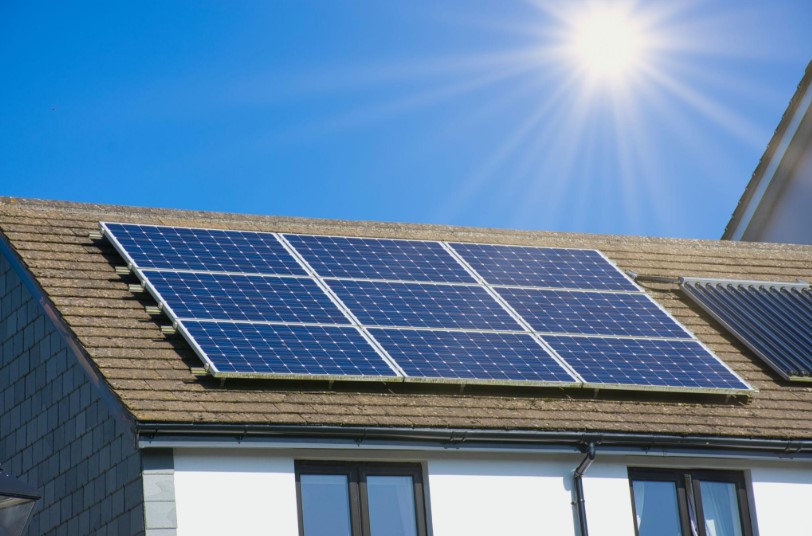
Summer generally provides the highest solar generation in the UK because daylight hours are longer.
During this period:
- Solar panels receive more daylight.
- Solar electricity generation can continue for longer.
- Household systems can generate surplus electricity.
- Solar battery storage can capture excess daytime energy.
- Homeowners may use more solar electricity during daylight hours.
Spring Solar Electricity Generation
Spring can provide favourable solar generation conditions.
Longer days and improving sunlight levels often result in increasing electricity production compared with winter.
This period can also be useful for monitoring system performance before the higher-generation summer months.
Autumn Solar Electricity Generation
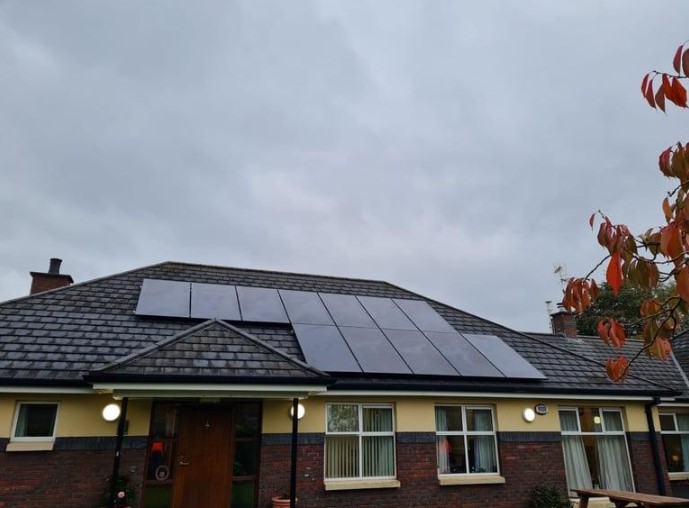
Solar generation gradually declines during autumn as daylight hours become shorter.
Cloud cover and changing weather conditions can also affect daily production.
Homeowners may notice that their solar systems generate less electricity in October and November than they did during the summer.
Winter Solar Electricity Generation
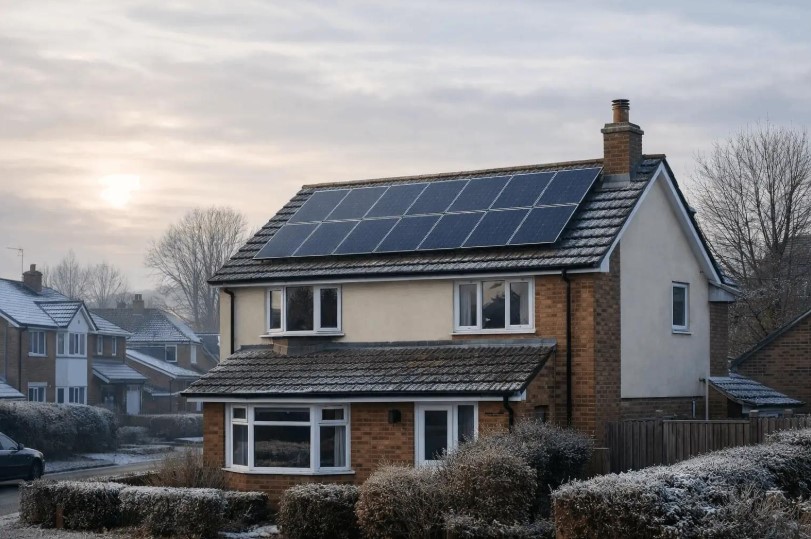
Winter generally delivers the lowest solar generation.
Short daylight hours and weaker sunlight reduce the amount of electricity produced each day.
This is why homeowners should consider their annual energy requirements rather than expecting solar panels to produce the same electricity throughout the year.
A modelled UK solar dataset shows that monthly generation can vary considerably, with June production substantially higher than December production. solar.org.uk+1
Which Factors Affect How Much Electricity Solar Panels Generate Per Day?
Several technical and environmental factors determine the amount of electricity a solar PV system can generate.
Understanding these factors helps homeowners make better decisions when planning a solar panel installation.
Solar Panel Efficiency
Solar panel efficiency describes how effectively a panel converts incoming sunlight into electricity.
Higher-efficiency panels can produce more electricity from a given roof area, depending on their rated capacity and installation conditions.
This can be particularly beneficial for properties with limited available roof space.
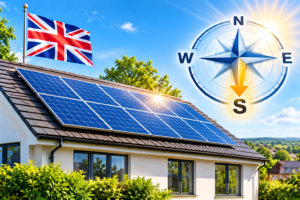
Roof Direction and Orientation
Roof direction influences how much sunlight solar panels receive throughout the day.
In the UK:
- South-facing roofs: Generally provide strong overall annual solar generation.
- South-east-facing roofs: Receive useful morning and midday sunlight.
- South-west-facing roofs: Can receive more afternoon sunlight.
- East-facing roofs: Often generate more electricity earlier in the day.
- West-facing roofs: Often generate more electricity later in the day.
- North-facing roofs: Generally produce less electricity and require careful assessment.
South-facing roofs are often preferred, but east-west installations can also be effective depending on the household’s electricity consumption.
A suitable system design should consider the entire roof rather than assuming that every property needs a south-facing installation. cat.org.uk+1
Roof Angle and Solar Panel Tilt
The angle at which solar panels are installed affects how much sunlight reaches their surfaces.
A suitable tilt angle can help maximise annual electricity generation.
The ideal angle depends on geographical location, roof structure and panel orientation.
An experienced solar installer can assess the roof and recommend an appropriate mounting arrangement.
Shading From Trees and Buildings
Shading can significantly reduce solar panel electricity production.
Common sources of shading include:
- Nearby buildings
- Large trees
- Chimneys
- Roof structures
- Satellite dishes
- Other surrounding obstructions
Even partial shading can affect the performance of a solar array, depending on its electrical configuration and equipment.
A professional shading assessment can help identify suitable panel positions and reduce avoidable generation losses. solar.org.uk
Solar Panel Temperature
Solar panels are designed to operate under outdoor conditions, but their electrical performance can be affected by temperature.
High cell temperatures generally reduce the voltage and power output of conventional silicon solar panels.
This means that a bright, cooler day can sometimes provide better panel efficiency than an extremely hot day.
Solar Inverter Performance
A solar inverter converts the direct current generated by solar panels into alternating current used by household appliances.
Its capacity, efficiency and configuration can influence the usable electricity produced by the overall system.
Choosing a suitable inverter is important for achieving reliable solar system performance.
Panel Condition and Maintenance
Dirt, leaves, bird droppings and other surface obstructions can reduce the amount of sunlight reaching photovoltaic cells.
Damaged panels, loose electrical connections or inverter faults can also affect electricity generation.
Regular system monitoring and appropriate maintenance help identify performance problems.
How much energy from solar panels Generate Per Hour?
Solar panel electricity production changes throughout the day.
Panels generally generate the most electricity when sunlight is strong and reaches their surfaces at a favourable angle.
For example, a 4kW solar system may produce different amounts of electricity during different periods.
| Time of Day | Typical Generation Pattern |
|---|---|
| Early morning | Low generation |
| Mid-morning | Increasing generation |
| Around midday | Often the highest generation |
| Afternoon | Gradually changing generation |
| Evening | Declining generation |
| Night | No solar electricity generation |
These are general patterns rather than fixed production times. Cloud cover, roof orientation and season can change the generation profile.
For example, an east-facing system may generate more electricity during the morning, whereas a west-facing system may produce more during the afternoon.
This is why the timing of electricity production is important when deciding how to use solar-generated electricity.
Can Solar Panels Generate Electricity on Cloudy Days?
Yes. Solar panels can generate electricity even when the sky is cloudy.
Photovoltaic technology uses daylight rather than requiring constant direct sunshine.
However, the amount of electricity generated during cloudy conditions is generally lower than during clear and sunny weather.
The difference depends on several factors:
- Cloud thickness and coverage.
- Available daylight.
- Solar panel efficiency.
- Installation direction and angle.
- Surrounding shading.
- Overall system condition.
For UK homeowners, this means solar panels remain useful even though the country experiences frequent cloudy weather.
A properly designed solar PV system can generate electricity throughout the year, although its output will vary between seasons and weather conditions. goodfinance.org.uk+1
How Can You Calculate Your Solar Panel Daily Electricity Generation?
You can estimate daily solar generation by using your solar system’s capacity and the expected equivalent full-output hours.
The basic calculation is:
Solar panel daily generation formula
\[ \text{Daily kWh}=\text{System kWp}\times\text{Equivalent hours} \]
Example calculation
- Solar system capacity: 4kWp
- Equivalent full-output hours: 2.5
\[ 4\times2.5=10\text{ kWh} \]
10 kWh
Estimated electricity generated in one day.
This is a simplified estimate. A more detailed calculation should account for system losses, weather, shading, inverter performance and seasonal solar conditions.
For a UK property, annual generation estimates are often more useful for assessing overall performance. One commonly used planning approach is to multiply installed capacity by the expected annual yield per kWp. solar.org.uk+1
How Can Solar Battery Storage Help You Use More Solar Electricity?
Generating electricity is only one part of a solar energy system. Another important consideration is how and when you use the electricity produced.
Solar panels often generate the most electricity during daylight hours. However, many households use more electricity during the evening when solar production has declined or stopped.
This is where solar battery storage becomes useful.
A solar battery stores surplus electricity generated by solar panels so that it can be used later.
For example:
- Solar panels generate electricity during the morning.
- Household appliances use some of the generated electricity.
- Surplus electricity charges the battery.
- The battery stores the available energy.
- Stored electricity can be used during the evening or at other suitable times.
Main Benefits of Solar Battery Storage
- Stores surplus solar electricity.
- Makes more generated energy available after sunset.
- Can reduce reliance on grid electricity.
- Helps households manage electricity consumption.
- Can work with compatible hybrid inverter systems.
- Can help increase the proportion of solar electricity used within the property.
Battery storage does not increase the amount of electricity generated by solar panels. Instead, it helps households use more of the electricity their system has already produced.
You should also consider battery capacity, charging power, discharge limits and household consumption when choosing a suitable storage system.
How Much of Your Household Electricity Can Solar Panels Cover?
The amount of household electricity covered by solar panels depends on the relationship between electricity generation and consumption.
For example, a household using 3,500 kWh annually may install a solar system capable of generating a similar amount over the year.
However, this does not mean the household will be completely independent of the electricity grid.
The reason is that solar generation and household electricity consumption do not always happen at the same time.
During sunny afternoons, the system may produce more electricity than the household needs. During evenings and winter periods, electricity demand may exceed solar production.
A solar battery can help bridge some of this difference by storing surplus daytime electricity for later use.
Ways to Use More Solar Electricity at Home
- Run washing machines during daylight hours.
- Operate dishwashers when solar generation is higher.
- Charge compatible electric vehicles during the day.
- Use solar electricity for suitable household appliances.
- Install compatible battery storage.
- Monitor daily generation and consumption.
Matching appliance usage with solar production can help increase the amount of generated electricity used directly within the property.
How Can You Monitor Your Solar Panel Electricity Generation?
Monitoring your solar PV system allows you to understand how much electricity your panels produce and how effectively the system operates.
Most modern solar installations include monitoring facilities through an inverter display or a dedicated mobile application.
Depending on the equipment, monitoring systems may show:
- Current solar power generation.
- Daily electricity production.
- Monthly generation figures.
- Annual electricity generation.
- Battery charging and discharging.
- Household electricity consumption.
- Electricity imported from or exported to the grid.
By reviewing these figures regularly, homeowners can identify changes in solar system performance.
For example, if a system produces considerably less electricity than expected on several comparable sunny days, it may be worth checking for shading, dirt, inverter alerts or technical faults.
Solar monitoring can therefore help homeowners understand their renewable energy production and identify potential performance issues.
Read More About; How Long Do Solar Panels Last UK
Is a Larger Solar Panel System Always Better?
A larger solar panel system can generate more electricity, but the best system size depends on your actual energy requirements.
Installing more panels than your property needs may not always provide the best financial outcome.
Before choosing a system, consider:
- Your annual household electricity consumption.
- Available roof space.
- Roof direction and pitch.
- Existing shading.
- Daytime electricity usage.
- Future electric vehicle charging requirements.
- Whether you plan to install a solar battery.
- Your budget and expected electricity savings.
For example, a household with moderate electricity consumption may find a 4kW system suitable, while a larger property with an electric vehicle and higher energy demand may benefit from considering a larger installation.
A professional solar assessment can help identify an appropriate system size based on your property and electricity usage.
Why Choose Solar Xtra for Solar Panel Installation?
Choosing the right solar installation company is an important step towards generating renewable electricity for your property.
Content solar Xtra that provides solar energy installation solutions for residential and commercial properties, helping customers consider suitable systems based on their energy requirements and available installation space.
Whether you are planning a new solar PV system or considering additional energy equipment, proper system design and installation are essential for reliable performance.
Solar Xtra Installation Services
Solar Panel Installation
Solar panel installation helps residential and commercial properties generate renewable electricity using photovoltaic technology.
Battery Storage Systems
Battery storage installation allows compatible systems to store surplus solar electricity for use when solar generation is lower.
Solar Inverter Installation
A suitable solar inverter converts electricity generated by solar panels into usable AC electricity for your property.
Solar Monitoring
Solar monitoring solutions help property owners track electricity generation and understand their system’s performance.
Commercial Solar Installation
Commercial solar installations help businesses generate electricity for their operational requirements using rooftop or other suitable solar PV arrangements.
Air Source Heat Pump Installation
Air source heat pump installations provide an alternative heating solution by transferring heat from outdoor air into a property’s heating system.
With appropriate planning, equipment selection and professional installation, solar energy can become a useful part of a property’s wider energy strategy.
Conclusion: How Much Can Solar Panels Generate Electricity Per Day?
The amount of electricity solar panels generate per day depends on their capacity, installation conditions, location, weather and seasonal daylight.
A residential solar system can generate different amounts of electricity throughout the year. A 4kW system, for example, may produce around 3,200–3,600 kWh annually under favourable UK conditions, equivalent to approximately 8.8–9.9 kWh per day when averaged across the year.
However, actual daily output can be considerably higher during sunny summer days and much lower during winter.
For the best results, homeowners should choose an appropriately sized solar PV system, consider roof orientation and shading, and explore battery storage if they want to use more of their generated electricity.
Solar Xtra can help homeowners and businesses consider suitable solar panel installation solutions based on their property and energy requirements.
FAQs
1. How much electricity can solar panels generate per day in the UK?
The amount depends on the system size, weather and installation conditions. A 4kW solar panel system may generate approximately 8.8–9.9 kWh per day when averaged across a year under favourable UK conditions.
2. How much electricity does one 400W solar panel generate per day?
A 400W solar panel can generate approximately 1 kWh using an illustrative 2.5 equivalent full-output hours. Actual production depends on sunlight, season and installation conditions.
3. Do solar panels generate electricity during winter?
Yes. Solar panels continue generating electricity during winter because they use daylight rather than requiring hot weather. However, shorter days and weaker sunlight generally result in lower electricity production.
4. Can solar panels work on cloudy days?
Yes. Solar panels can generate electricity from indirect and diffuse daylight. However, their output is generally lower during heavily overcast conditions than on sunny days.
5. How many solar panels are needed to generate 10 kWh per day?
The number depends on individual panel wattage and available sunlight. For example, a 4kW system could generate approximately 10 kWh using 2.5 equivalent full-output hours.
6. Do solar panels generate electricity at night?
No. Solar panels require daylight to generate electricity. However, a compatible solar battery can store surplus daytime electricity for use during the evening and night.
7. Does roof direction affect solar panel electricity generation?
Yes. Roof orientation affects how much sunlight panels receive. South-facing roofs generally provide strong annual generation in the UK, while east- and west-facing roofs can also provide useful electricity production.
8. Can solar panels generate enough electricity for an entire house?
Yes, a suitably sized solar system can generate an amount of electricity equal to or greater than a household’s annual consumption. However, solar production varies throughout the day and year, so grid electricity or battery storage may still be required.
9. Does solar battery storage increase electricity generation?
No. Solar batteries do not increase the electricity produced by solar panels. They store surplus electricity so that it can be used later when solar generation is unavailable or insufficient.
10. How can I check how much electricity my solar panels generate?
You can monitor solar electricity production through your inverter display or compatible solar monitoring application. These systems can provide daily, monthly and annual generation information.
11. Does solar panel efficiency affect daily electricity production?
Yes. Higher-efficiency solar panels can generate more electricity from a given roof area when compared under equivalent conditions. This can be useful for properties with limited installation space.
12. Are solar panels worth installing in the UK despite cloudy weather?
Solar panels can still be worthwhile in the UK because they generate electricity from daylight, including indirect sunlight. Their suitability depends on installation costs, electricity consumption, roof conditions and expected annual generation.
13. How much energy does a solar panel produce?
A standard 400-watt solar panel can produce approximately 1.6 to 2.0 kWh of electricity per day under good sunlight conditions. This equals around 48–60 kWh per month or 584–730 kWh per year. Actual energy production depends on sunlight hours, panel direction, weather conditions, shading, and installation quality.
14. How much a solar panel can generate electricity?
A standard 400-watt solar panel can generate approximately 1.6–2.0 kWh of electricity per day under 4–5 peak sunlight hours. This means it can produce around 48–60 kWh per month and 584–730 kWh per year. Actual electricity generation depends on sunlight availability, weather, panel efficiency, roof direction, shading, and installation conditions.
15. How much energy do solar panels produce per day?
Solar panels typically produce 4–5 kWh of electricity per day per kilowatt (kW) of installed capacity, depending on sunlight conditions and location. For example, a 400-watt solar panel can generate approximately 1.6–2.0 kWh per day under good sunlight. Actual daily energy production varies based on weather, shading, panel direction, efficiency, and installation quality.
Want to know what solar would save on your own roof?
Book Your Free Survey