What Is the Best Roof Direction for Solar Panels UK?
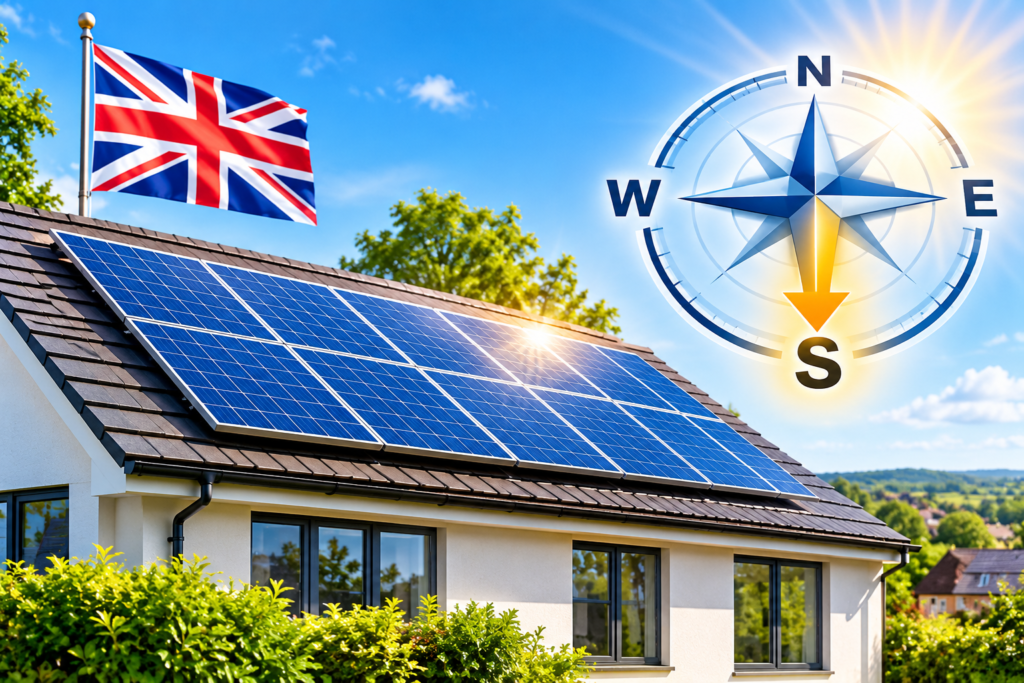
Best Roof Direction for Solar Panels UK
Installing solar panels is an effective way to generate renewable electricity and reduce your household’s dependence on energy supplied from the grid. However, before arranging a solar panel installation, homeowners should understand how their roof direction can affect electricity generation.
One of the most important factors is roof orientation. The direction your roof faces determines how much direct sunlight your solar panels receive throughout the day. A well-positioned solar system can capture more sunlight and generate more electricity over the year.
So, what is the best roof direction for solar panels in the UK?
Generally, a south-facing roof is the best option because it receives strong sunlight around midday, allowing solar panels to generate more electricity throughout the year. However, east-facing and west-facing roofs can also deliver good results. The right choice depends on your household’s electricity usage, roof angle, available space and surrounding shade.
Solar Xtra explains the best roof direction for solar panels in the UK, compares different roof orientations, discusses the ideal installation angle and covers the important factors homeowners should consider before installing a solar PV system.
Why Does Roof Direction Matter for Solar Panels?
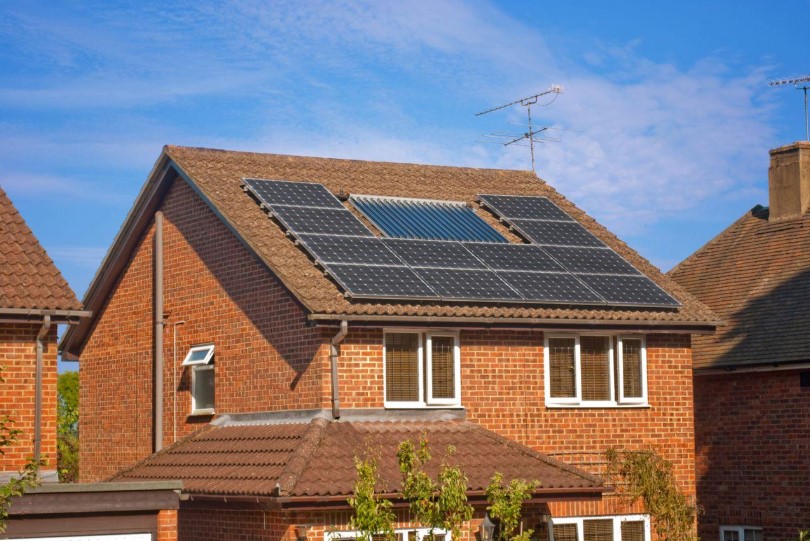
Roof direction matters because solar panels generate electricity by capturing sunlight. Their position determines how much sunlight reaches their surface and at what time of the day they receive it.
In the UK, the sun generally moves across the southern part of the sky. Therefore, roofs facing south can receive sunlight for a large part of the day, making them a suitable location for residential solar panels.
However, not every property has a south-facing roof. Some houses have east-facing, west-facing or north-facing roof sections. This does not automatically mean that solar installation is unsuitable.
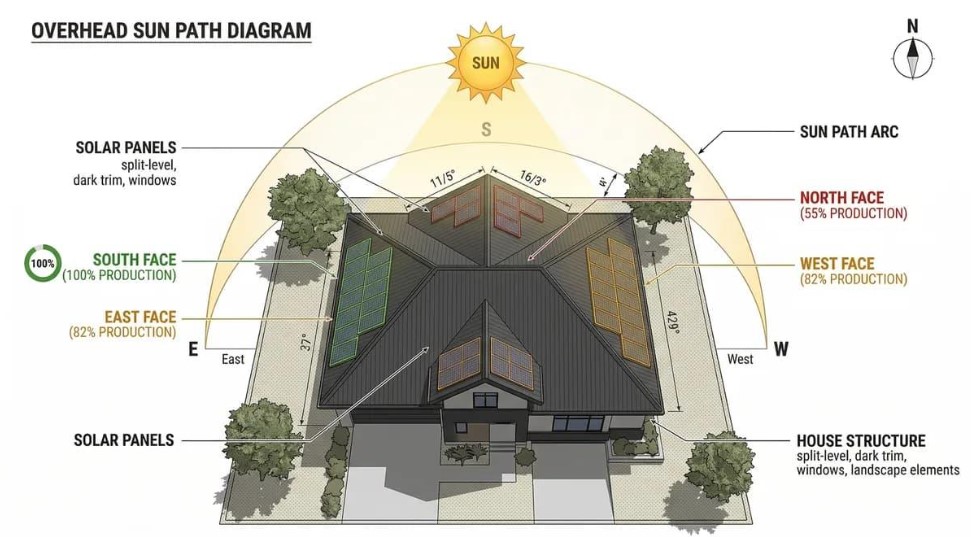
Different roof directions produce electricity at different times:
- South-facing roofs generally generate more electricity around midday.
- East-facing roofs receive more sunlight during the morning.
- West-facing roofs receive more sunlight during the afternoon and early evening.
- North-facing roofs generally receive less direct sunlight on typical pitched roofs.
Understanding these differences helps homeowners select a suitable solar panel positioning strategy.
What Is the Best Roof Direction for Solar Panels UK?
The best roof direction for solar panels in the UK is generally south-facing. This orientation allows panels to receive substantial sunlight throughout the day, particularly around midday when the sun is higher in the sky.
A south-facing solar installation can achieve strong annual electricity generation when combined with a suitable roof angle and minimal shading.
However, south is not the only workable direction. South-east and south-west orientations can also deliver excellent performance, while east and west-facing systems remain practical options for many homes.
Here is a general comparison:
| Roof Direction | Solar Performance | Suitability |
|---|---|---|
| South | Highest annual generation | Excellent |
| South-East | Very good generation | Excellent |
| South-West | Very good generation | Excellent |
| East | More morning generation | Good |
| West | More afternoon generation | Good |
| North-East | Lower annual generation | Limited |
| North-West | Lower annual generation | Limited |
| North | Generally lowest performance on pitched roofs | Usually not recommended |
According to the Energy Saving Trust, east-facing and west-facing solar systems can produce approximately 15–20% less energy than comparable south-facing systems.
Actual results depend on the roof pitch, location, shading, panel specifications and installation design.
1. South-Facing Roofs: The Best Option for Solar Panels
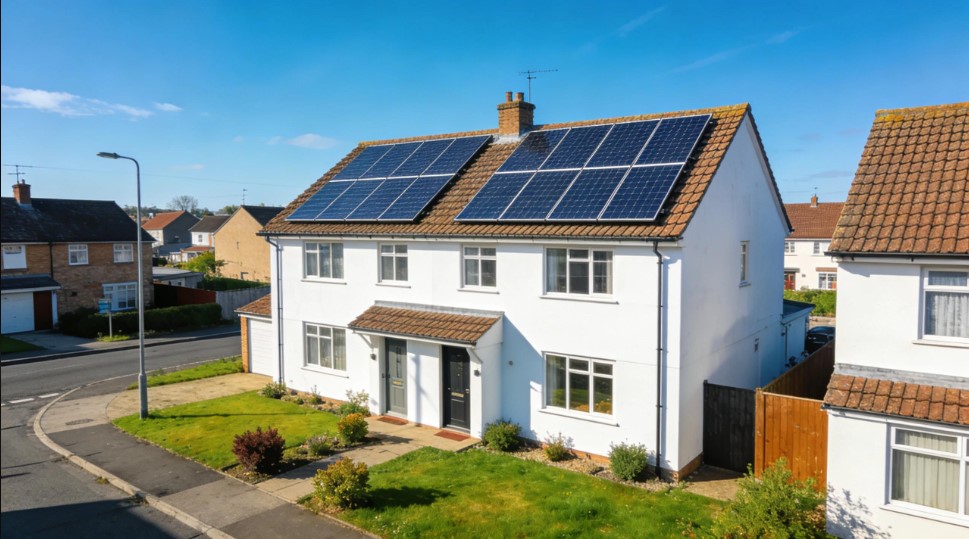
A south-facing roof is generally considered the best option for residential solar panel installation in the UK.
This is because the sun travels across the southern part of the sky, allowing south-facing panels to capture sunlight during the central hours of the day.
When solar panels are installed on an unshaded south-facing roof, they can achieve strong annual electricity generation.
Benefits of South-Facing Solar Panels
Higher electricity generation: South-facing panels generally produce more electricity annually than panels installed in other directions on comparable pitched roofs.
Better sunlight exposure: They receive strong sunlight during the middle of the day, supporting consistent solar energy production.
Suitable for residential properties: Many UK homes have south-facing roof sections that can accommodate a residential solar PV system.
Potential electricity bill savings: Higher electricity generation can help households use more self-generated electricity and reduce their reliance on grid electricity.
Are South-Facing Solar Panels Always the Best?
Not necessarily. Roof shading, installation angle and household electricity consumption also affect the overall benefits.
For example, a south-facing roof shaded by a large building may perform worse than an unshaded east-facing or west-facing roof.
Therefore, homeowners should consider the complete roof conditions rather than choosing an installation direction based only on compass orientation.
2. East-Facing Roofs: Generate More Electricity in the Morning
East-facing roofs receive sunlight earlier in the day because the sun rises in the east.
Solar panels installed in this direction generally begin generating electricity earlier than south-facing panels.
This can be useful for households where electricity consumption is higher during the morning.
Benefits of East-Facing Solar Panels
- Earlier electricity generation after sunrise.
- Suitable for homes with east-facing roof sections.
- Can help power morning household activities.
- Can work alongside battery storage systems.
- Provides an alternative when south-facing roof space is unavailable.
For example, households that use washing machines, kettles, lighting and other electrical appliances in the morning may benefit from east-facing solar panels.
Although annual electricity generation is generally lower than a comparable south-facing installation, an east-facing system can still provide useful renewable electricity.
Are East-Facing Solar Panels Worth Installing in the UK?
Yes. East-facing solar panels can be a suitable investment when the roof receives sufficient sunlight and has an appropriate installation angle.
Their morning generation profile may also help homeowners use more solar electricity directly rather than relying on grid electricity during those hours.
3. West-Facing Roofs: Generate More Electricity in the Afternoon
West-facing roofs receive more direct sunlight during the afternoon and early evening.
This makes them a practical option for households that use more electricity later in the day.
For example, families may use more electricity after returning home from work or school. Appliances such as televisions, ovens, washing machines and lighting can increase household electricity consumption during these hours.
Benefits of West-Facing Solar Panels
Afternoon electricity generation: Panels receive sunlight later in the day, extending useful generation into the afternoon.
Suitable for evening household routines: They can better match electricity consumption that takes place later in the day.
Alternative roof installation option: West-facing roofs provide another suitable location when south-facing roof space is limited.
Battery storage compatibility: Excess electricity generated during the afternoon can be stored in a compatible solar battery for later use.
Are West-Facing Solar Panels Efficient?
Yes. West-facing solar panels can produce useful amounts of electricity throughout the year.
Although their annual output is generally lower than that of comparable south-facing systems, they can offer a better match for some household electricity usage patterns.
4. South-East and South-West Roofs: Excellent Alternatives
South-east and south-west-facing roofs are also excellent options for solar panel installation in the UK.
These orientations receive sunlight during a large part of the day and can achieve performance relatively close to a south-facing installation.
South-east-facing panels receive stronger morning sunlight, while south-west-facing panels receive more sunlight during the afternoon.
For homeowners without a perfectly south-facing roof, these orientations can provide a practical balance between electricity generation and household consumption.
South-East vs South-West Solar Panels
| Feature | South-East | South-West |
|---|---|---|
| Main generation period | Morning | Afternoon |
| Sunlight exposure | Earlier in the day | Later in the day |
| Annual performance | Very good | Very good |
| Household suitability | Morning energy users | Afternoon energy users |
| Installation suitability | Good | Good |
Both orientations can support effective residential solar energy systems.
The final choice should be based on roof conditions, shading and the household’s electricity consumption.
5. North-Facing Roofs: Are They Suitable for Solar Panels?
North-facing roofs are generally the least suitable option for solar panels on typical pitched UK roofs.
This is because they receive less direct sunlight throughout the day compared with south-facing roofs.
As a result, solar panels installed on steep north-facing roof sections usually generate considerably less electricity.
However, this does not mean every north-facing roof is automatically unsuitable.
A shallow roof pitch may receive more usable sunlight than a steep north-facing roof. A professional installer can also assess alternative roof sections or other suitable installation arrangements.
Why Are North-Facing Roofs Less Effective?
There are several reasons:
- Less direct sunlight throughout the day.
- Lower solar exposure during important daylight hours.
- Reduced annual electricity generation on typical pitched roofs.
- Potentially longer financial payback periods.
If your property only has north-facing roof space, it is worth arranging a professional assessment before making a decision.
The installer can evaluate the roof angle, surrounding obstructions and available alternatives.
What Is the Best Angle for Solar Panels in the UK?
Apart from roof direction, the installation angle is another important factor affecting solar panel performance.
The angle, also known as roof pitch or panel tilt, determines how directly sunlight reaches the solar panel surface.
In the UK, a south-facing solar panel installation with an angle of approximately 30–40 degrees is generally a good starting point for strong annual electricity generation.
However, the ideal angle can vary depending on roof direction, location and installation requirements.
Recommended Solar Panel Angles
| Roof Direction | General Installation Consideration |
|---|---|
| South | Around 30–40 degrees is a good starting point |
| South-East | A suitable roof pitch can provide strong output |
| South-West | A suitable roof pitch can provide strong output |
| East | Panel angle should be assessed alongside orientation |
| West | Panel angle should be assessed alongside orientation |
| North | Requires careful performance assessment |
These are general design considerations rather than fixed installation rules.
Does Roof Pitch Affect Solar Panel Efficiency?
Yes. Roof pitch affects the angle at which sunlight reaches the solar panels.
A suitable tilt can help panels receive more sunlight over the year. However, the best angle depends on the direction the panels face.
For example, a south-facing roof with a suitable pitch can produce strong annual electricity generation. A steep north-facing roof may perform considerably worse.
Professional solar designers consider both orientation and tilt when planning a system.
What Factors Affect Solar Panel Performance Besides Roof Direction?
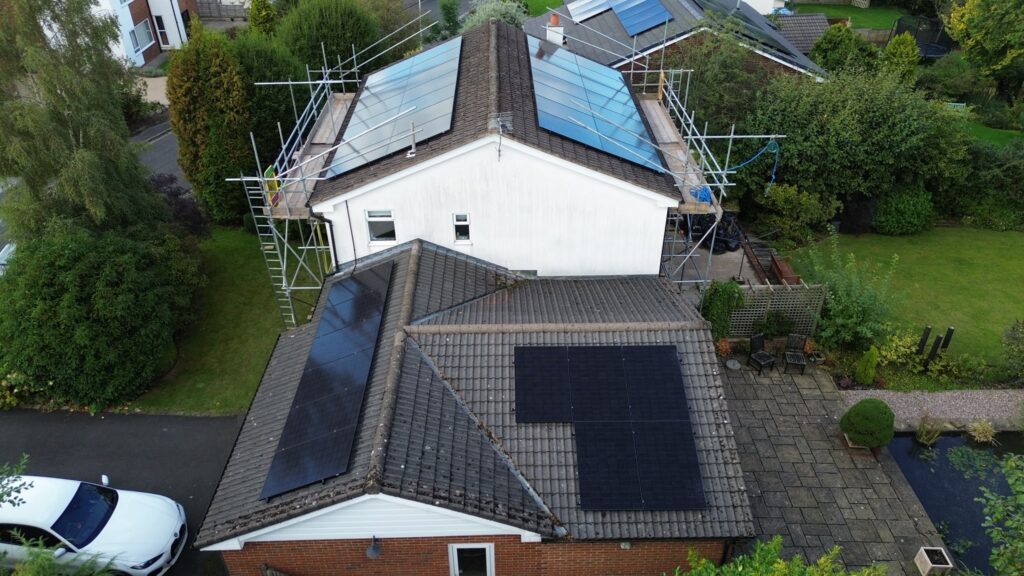
Although roof direction is important, several other factors influence how much electricity a solar PV system can generate.
Homeowners should understand these factors before choosing a solar panel installation.
1. Roof Shading
Shading is one of the most important factors affecting solar panel performance.
Trees, chimneys, nearby buildings, walls and other obstructions can block sunlight from reaching the panels.
Even a roof with an excellent south-facing orientation may produce less electricity if significant shading occurs during the day.
Before installation, the roof should be assessed for shading at different times and throughout the year.
Where shading cannot be avoided, suitable technologies such as microinverters or power optimisers may help reduce its effect.
2. Roof Size and Available Space
The available roof area determines how many solar panels can be installed.
A larger suitable roof section may accommodate more panels and allow a higher-capacity solar PV system.
However, roof space alone does not determine the final system size.
Installers must also consider:
- Roof direction and pitch.
- Chimneys and skylights.
- Roof structure and condition.
- Shading from surrounding objects.
- Access and installation requirements.
A professional assessment helps determine the most suitable panel arrangement.
3. Solar Panel Quality
Solar panel specifications can affect the amount of electricity generated from available roof space.
Different panels have different efficiency ratings, power outputs and performance characteristics.
When choosing a system, homeowners should consider:
- Solar panel efficiency.
- Rated power output.
- Product warranty.
- Performance warranty.
- Temperature performance.
- Manufacturer specifications.
Choosing suitable solar equipment is important for long-term system performance.
4. Weather and Seasonal Changes
Solar panels generate electricity throughout the year, including during cloudy weather.
However, electricity generation changes with daylight hours, sunlight intensity and seasonal weather conditions.
During summer, longer daylight hours generally provide more opportunities for solar electricity generation.
During winter, shorter days and lower sunlight levels usually reduce overall generation.
This is why a solar system should be designed around expected annual performance rather than relying on summer production alone.
5. Roof Condition and Structure
Before installing solar panels, the roof should be checked to ensure it is suitable for the additional equipment.
Damaged tiles, ageing roofing materials or structural concerns should be addressed before installation.
A suitable roof structure helps provide a secure installation and reduces the risk of future problems.
Can You Install Solar Panels on an East and West-Facing Roof?
Yes. Solar panels can be installed on both east-facing and west-facing roof sections.
This arrangement is commonly known as an east-west solar panel system.
Instead of placing all panels in one direction, the installation distributes panels across both roof sections.
This can provide a more balanced electricity generation profile throughout the day.
How Does an East-West Solar System Work?
East-facing panels generate more electricity during the morning, while west-facing panels produce more electricity during the afternoon.
Together, these panels can extend the period during which a household receives solar electricity.
For example:
- Morning: East-facing panels begin generating electricity.
- Midday: Both roof sections may contribute electricity.
- Afternoon: West-facing panels continue generating electricity.
- Evening: A compatible battery can supply stored electricity when solar generation decreases.
Benefits of East-West Solar Panel Installation
- More balanced electricity generation.
- Better coverage across morning and afternoon hours.
- Efficient use of available roof space.
- Suitable for homes without large south-facing roof sections.
- Compatibility with suitable solar battery storage systems.
Although the total annual generation may be lower than a comparable south-facing system, an east-west arrangement can help match electricity production with household consumption.
Does Solar Battery Storage Help With Different Roof Directions?
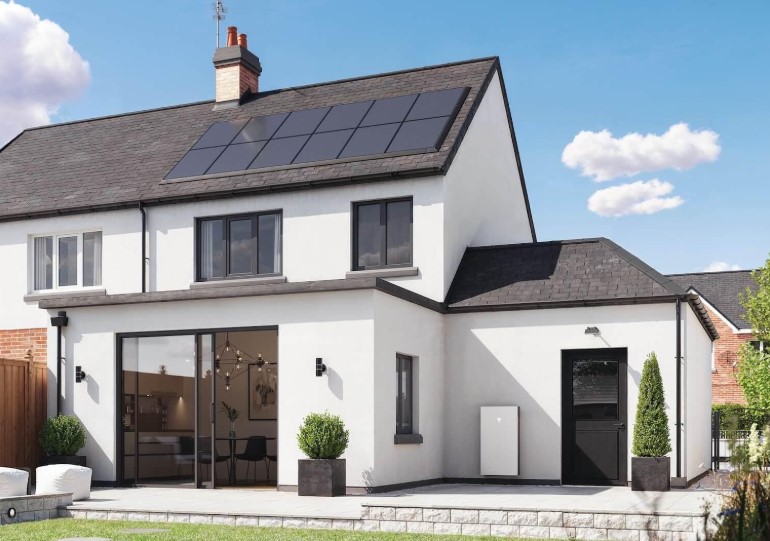
Yes. Solar battery storage can help homeowners make better use of electricity generated by panels installed in different roof directions.
Solar panels generate electricity during daylight hours, but household energy requirements continue after sunset.
A solar battery stores surplus electricity so it can be used later when the panels are generating less or no electricity.
For example, a west-facing solar installation may generate useful electricity during the afternoon. If household demand is low at that time, surplus electricity can be stored in a compatible battery.
Homeowners can then use the stored electricity during the evening.
Benefits of Solar Battery Storage
- Stores excess solar electricity for later use.
- Helps increase household use of self-generated electricity.
- Can reduce reliance on grid electricity.
- Works with suitable south-, east- and west-facing solar installations.
- Helps manage differences between electricity generation and household demand.
The size and suitability of a battery should be based on household electricity consumption, solar system capacity and storage requirements.
How Do You Choose the Right Roof Direction for Solar Panel Installation?
Choosing the right roof direction requires more than checking whether your property faces south.
A proper assessment should consider the complete installation environment and your household’s energy requirements.
Here are some important steps to consider.
Step 1: Identify Your Roof Direction
First, determine whether your available roof sections face south, north, east or west.
You can use a compass or a suitable digital mapping tool to identify the direction.
If your property has multiple roof sections, assess each section separately.
Step 2: Check the Roof Angle
The roof pitch affects how sunlight reaches the panels.
A professional installer can measure the roof angle and determine whether the existing pitch is suitable.
Step 3: Assess Shading
Check whether nearby trees, buildings, chimneys or other structures block sunlight.
Shading should be assessed at different times of the day and during different seasons.
Step 4: Review Household Electricity Consumption
Think about when your household uses the most electricity.
For example:
- Morning energy use may favour east-facing panels.
- Afternoon energy use may favour west-facing panels.
- Daytime energy use can benefit from strong south-facing generation.
- Evening energy use may make battery storage worth considering.
Step 5: Arrange a Professional Solar Assessment
A professional assessment helps determine the most suitable solar panel arrangement for your property.
The installer can evaluate roof direction, pitch, shading, available space and electrical requirements.
This information helps create a solar installation design that meets your household’s energy needs.
Why Choose Solar Xtra for Solar Panel Installation in the UK?
Choosing the right installation company is an important part of planning a residential solar energy system.
At Solar Xtra, we focus on providing solar panel installation solutions designed around individual property requirements.
Every property has different roof conditions, available space and electricity requirements. Therefore, selecting the right system requires careful planning and consideration.
Our solar installation approach takes important factors into account, including roof orientation, roof pitch, shading, available installation space and household electricity usage.
Our Solar Installation Services
Solar Xtra provides installation solutions covering:
- Residential solar panel installation.
- Commercial solar panel installation.
- Solar battery storage systems.
- Solar inverter installation.
- Air source heat pump installation.
- Solid wall insulation.
- Solar monitoring solutions.
Whether your property has a south-facing, east-facing or west-facing roof, the suitability of a solar installation should be assessed according to its individual conditions.
Our aim is to help homeowners and businesses understand their installation options and select a suitable renewable energy system.
Contact Solar Xtra to discuss your property’s solar installation requirements and arrange a professional assessment.
Final Thoughts: Which Roof Direction Is Best for Solar Panels in the UK?
A south-facing roof is generally the best direction for solar panels in the UK because it provides strong sunlight exposure and supports higher annual electricity generation.
However, south-east and south-west-facing roofs are also excellent options. East-facing and west-facing roofs can generate useful electricity and may suit households with different energy consumption patterns.
North-facing roofs are generally less suitable, particularly when they have a steep pitch.
Remember that roof direction is only one part of a successful solar installation. Roof angle, shading, panel quality, available space and household electricity requirements also influence system performance.
Before making a decision, arrange a professional roof assessment to identify the most suitable solar panel positioning for your property.
Get in touch with Solar Xtra to discuss your solar panel installation requirements and explore suitable solar energy solutions for your home or business.
FAQs
1. What is the best roof direction for solar panels UK?
South-facing roofs are generally the best direction for solar panels in the UK. They receive substantial sunlight throughout the day, particularly around midday, and can achieve higher annual electricity generation than comparable east- or west-facing installations.
2. Are south-facing solar panels better than east-facing panels?
Generally, yes. South-facing solar panels usually generate more electricity over the year. However, east-facing panels produce more electricity during the morning, which may suit households that use more energy earlier in the day.
3. Can solar panels work on a west-facing roof in the UK?
Yes. West-facing solar panels work well in many UK properties. They receive more sunlight during the afternoon and early evening, making them a practical option for households with higher electricity consumption later in the day.
4. What is the best angle for solar panels in the UK?
An angle of approximately 30–40 degrees is a good starting point for south-facing solar panels in the UK. However, the ideal installation angle depends on roof direction, location, shading and system design.
5. Are north-facing roofs suitable for solar panels?
North-facing roofs are generally less suitable because they receive less direct sunlight. However, shallow-pitched north-facing roofs may still be worth assessing. A professional installer can evaluate their expected electricity generation.
6. Do east and west-facing solar panels generate enough electricity?
Yes. East- and west-facing solar panels can generate useful amounts of electricity. Although their annual output is generally lower than comparable south-facing systems, they can still provide valuable renewable electricity for UK households.
7. Does roof direction affect solar panel efficiency?
Yes. Roof direction affects how much sunlight reaches solar panels and when electricity is generated. South-facing panels generally provide the highest annual output, while east- and west-facing panels produce more electricity during different parts of the day.
8. Can I install solar panels on both sides of my roof?
Yes. Solar panels can be installed on both east- and west-facing roof sections. This arrangement helps distribute electricity generation across the morning and afternoon, provided both roof sections are suitable for installation.
9. Do solar panels work during cloudy weather in the UK?
Yes. Solar panels can generate electricity during cloudy weather because they use daylight as well as direct sunlight. However, electricity production is generally lower when sunlight intensity decreases.
10. Does solar battery storage work with east-facing and west-facing panels?
Yes. Compatible solar battery storage systems can store surplus electricity generated by east-facing and west-facing solar panels. Homeowners can then use this stored electricity when solar generation decreases, including during the evening.
11. Does roof shading affect solar panel performance?
Yes. Shading from trees, chimneys, buildings and other obstructions can reduce electricity generation. A professional installer should assess shading before installation and determine whether microinverters or power optimisers would be suitable.
12. Can I install solar panels if my roof does not face south?
Yes. Solar panels can be installed on suitable east-facing, west-facing, south-east-facing and south-west-facing roofs. The final decision should depend on the expected electricity generation, roof condition and installation requirements.
Want to know what solar would save on your own roof?
Book Your Free Survey